Array
(
[0] => Array
(
[name] => Handial Jagannath Temple
[post_id] => 9243
[post_link] => http://offroadbangladesh.com/bn/places/handial-jogonnath-temple/
[thumb_link] => http://offroadbangladesh.com/wp-content/uploads/2015/05/handial-jogonnath-mondir-21-300x225.jpg
[post_content] =>
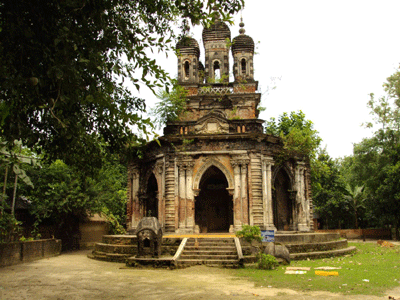
Handial Jagannath Temple (হান্ডিয়াল জগন্নাথ মন্দির) is an old temple located at Handial (হান্ডিয়াল) village of Chatmohor Upazila of Pabna district. As it is located at the Handial village, it is known as Handial Mandir too.
It is a single door small sized temple which was built using bricks. This temple gets narrower as it is progressing upwards. Only the front wall of the temple has some terracotta. The temple is placed over a high plinth.
From the inscription, it is found that the temple was reconstructed by someone named Bhobani Proshad during 1590. But scholars are assuming that the temple was built even another 100 years before from that time.
The whole temple premise is under a boundary. Another two newly temples are being constructed at the both side of the old temple. There is a small chariot (রথ) available inside the premise. Also, a Mondop (মন্ডপ) is available for the upcoming Hindu festival Durga Puja (দূর্গা পূজা).
)
[1] => Array
(
[name] => {:en}Ram Sadhur Asram{:}{:bn}রামসাধুর আশ্রম{:}
[post_id] => 6376
[post_link] => http://offroadbangladesh.com/bn/places/ram-sadhur-asram-%e0%a6%b0%e0%a6%be%e0%a6%ae%e0%a6%b8%e0%a6%be%e0%a6%a7%e0%a7%81%e0%a6%b0-%e0%a6%86%e0%a6%b6%e0%a7%8d%e0%a6%b0%e0%a6%ae/
[thumb_link] => http://offroadbangladesh.com/wp-content/uploads/2015/04/Ram-Sadhur-Asram-11.jpg
[post_content] => {:en}
Ram Thakur was a Hindu saint from Bengal, who had followers mostly from East Bengal; now Bangladesh and Tripura. He worked among people of various castes and faiths. He is also known as Shri Koibolyonath to his followers. He was born in the Bramhin Bidyalankar family at Dingamanik(Naria), in Shariatpur district, Bangladesh, on 2 February 1860 to father Radhamadhab Chakrabarty and mother Kamala Devi. Ram Sadhur Asram was named by Ram Thakur. It is the most favorite Hindu Structure in Shariatpur.
{:}{:bn}
রামঠাকুর ছিলেন বাংলার একজন হিন্দু সাধক। তাঁর বেশীরভাগ ভক্তই ছিল পূর্ব বাংলায় (বর্তমান বাংলাদেশ ও ত্রিপুরা)। বিভিন্ন বিশ্বাস এবং ধর্মের মানুষদের মধ্যে বিচরণ করেছেন তিনি। ভক্তদের রামঠাকুর পরিচিত ছিলেন শ্রী কৈবলযোনাথ নামে। ১৮৬০ সালের ২রা ফেব্রুয়ারি বর্তমান শরীয়তপুর জেলার ডিঙ্গামানিক (বর্তমান নড়িয়া উপজেলা)নামক স্থানে ব্রাহ্মিন বিদ্যালঙ্কার পরিবারে জন্মগ্রহন করেন রামঠাকুর। তাঁর পিতার নাম ছিল রাধামাধব চক্রবর্তী এবং মাতার নাম ছিল কমলা দেবী। রামসাধুর আশ্রমের নামকরন করা হয়েছে রামঠাকুরের নামে। এই আশ্রমটি শরীয়তপুর জেলার সর্বাধিক জনপ্রিয় হিন্দু স্থাপনা।
{:}
)
[2] => Array
(
[name] => Varatkhali Kastho Mandir
[post_id] => 5112
[post_link] => http://offroadbangladesh.com/bn/places/varatkhali-kastho-mandir/
[thumb_link] => http://offroadbangladesh.com/wp-content/uploads/2015/03/DSC08786-300x225.jpg
[post_content] =>
Varatkhali Kastho Mandir (ভরতখালী কাষ্ঠ মন্দির) is one of the most common Tirthasthan of Hindu community. It was built around two hundred years ago by Ramonikanto Ray Zamindar (রমনীকান্ত রায় জমিদার). There is a folktale that a pieces of timber had been found in Ghagot (ঘাঘট) river. Someone had collected the timber and when he hit it with an axe, the timber was bleeding out. That night, Zamindar Ramonikanto had dreamed someone saying, "I have come to your ghat, worship me with Eligible reception" (আমি তোর ঘাটে এসেছি,আমাকে যোগ্য সমাদর করে পূজা কর).
By the next day, the Zamindar ordered a craftsman(কারিগর) to make the timber into a sculpture as a Mandir. At the bottom of the sclupture, a Banian tree had been created. That is why it is called Kastho Mandir. Every year in the month of Boishakh, a beautiful crowded fair is held here.
)
[3] => Array
(
[name] => Kal Bhairab Temple
[post_id] => 1057
[post_link] => http://offroadbangladesh.com/bn/places/kal-bhairab-temple/
[thumb_link] => http://offroadbangladesh.com/wp-content/uploads/2015/02/800px-Kal_Bhairab_in_Brahmanbaria_Bangladesh1-300x225.jpg
[post_content] =>
Kal Bhairab Temple is a Hindu temple which is dedicated to the God Shiva. The temple is famous for the giant Shivalinga. Shivalinga is a 28-feet tall Shiva statue. No other statue in the world is assumed to be as big as it. Hindu Lord Shiva known as Kal Bhairab is the main attraction here, but Goddess Kali is also been worshiped. The location of statue of Kali is on the right side of the Kal Bhairab and the statue of the Goddess Saraswati on the left. The temple is a major pilgrimage place for Shaivites in Bangladesh.
The temple dates back to the 19th century. It is said that approximately 200 years ago a sculptor named Durgacharan Acharjee saw a dream which motivated and influenced him to make preparations to build the statue from soil. Noor Muhammad, the famous landlord of Sarail donated the land to build this temple.
Before the Brahmanbaria city was established, Medda was the market located beside the famous Titas river. This market is almost 300 years old. Durgacharan first built this statue by the bank of the river with soil. Regular prayers were held by the local fans until 1971.
During the Bangladesh Liberation War the Pakistani soldiers damaged and looted a lot of Hindu temples in Bangladesh. This temple was one of the damaged temples. The soldiers damaged the parts of this statue using dynamite. Later the statue was made again. It took four years to build this statue again but it reached the height of 24 feet. The current statue is made of stone.
Both regular and annual prayers are held here. People from different regions come to visit this temple. This place is also referred as one of the tourist attractions of the Brahmanbaria district. There are management committees to look after the temple. The giant statue of the Shiva is mostly locked for maintenance issues. The Government of Bangladesh looks after the charges for maintenance.
)
)