Brief
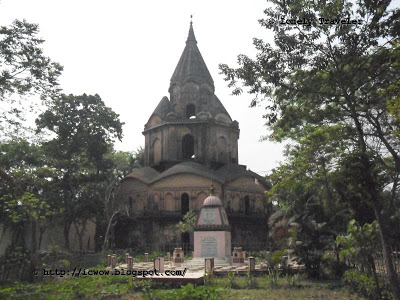
Jagannath Dev Mandir is one of the ancient temples in Comilla district. King of Tripura built it. It was named ‘Moharaja Radha Kishor Manikuo Bahadur’ during the 16th century. The gods Jagannath, Balabhadra and Subhadra were worshiped here. Initially, the statue of gods were at Tripura temple but later it was been shifted here. Wikipedia mentioned this as Saptratna Mandir, where as the travel book writer Mustafiz Mamun has introduced this as Sotero Rotno Mandir (সতের রত্নের মন্দির). There might be a state of confusion regarding the name, but this temple is unique considering the other temples from Bangladesh.
The deities of Jagannath, Balabhadra and Subhadra were originally installed in a temple in Tripura from where they were subsequently shifted to this temple. The terracotta brick work of the temple is in the typical Bengal style of temple architecture. Jagannath Temple is one of the oldest temples of Comilla district. It is located two km East from Comilla town, on East Bibirbazar Road, Comilla. (5km east from Comilla dist.)
This four storied, conical shaped temple is a brick built structure, constructed on a concrete octagonal base-stone. This is the only octagonal based and shaped temple of Bangladesh, and one of its type. External wall of every floor looks like octagons and were ascended like inverted Cone. It is a single spire Temple. I believe there were so many artistic terracotta all over this Mandir , from Top to bottom. I find some of the traditional Bengal design on the outside wall of third floor- a terracotta of flower, leaves and petals. Department of Archaeology renovated outside portions of Ground and first floor. Terracotta of these two floors was ruined.
There is a rumor about this ordinary looking spiritual place. Some believes there are two more floors underground, which is filled by sedimentation from Gumti River over the years. I feel this is a weak and bogus point.
This 16th Century edifice is almost 60 feet tall. There is a tank to the West of Temple premises. That Tank could be as old as the temple. The tank is also sketched in 1863 drawing [a British Library Collecton].
Array
(
[0] => Array
(
[name] => {:en}Puthia Temple{:}{:bn}পুঠিয়া মন্দির{:}
[post_id] => 3008
[post_link] => http://offroadbangladesh.com/bn/places/puthia-temple/
[thumb_link] => http://offroadbangladesh.com/wp-content/uploads/2015/02/puthia-temple21-300x225.jpg
[post_content] => {:en}
Puthia Temple Complex consists of a cluster of notable old Hindu temples in Puthia Upazila, Rajshahi Division, Bangladesh. Located 23 km to the east of Rajshahi city, it has the largest number of historic temples in Bangladesh. The temples were built by Hindu Zamindars Rajas of the Puthia Raj family who were noted philanthropists of Rajshahi. The temples have been built in terracotta in a variety of styles combining the typical Jor-bangla architecture with other influences. The Rajbari or Palace of the Raja of Puthia and the Dol Mancha are part of the complex. The temples are laid out around a lake with a sprawling lawn.
The Puthia Raj family was established by a holy man named Bhatsacharya, who lived in the 16th century. Raja Man Singh, governor of the Mughal emperor Akbar, confiscated the Jagir of the refractory pathan jagirdar of Rajshahi named Lashker Khan and bestowed the Zamindary on the saintly Bhatsacharya for his learning, but he declined. However, his son Pitambar was granted the Lashkarpur estate permanently. On his death, his son Nilambar received the title of Raja from Emperor Jahangir. The Puthia Royal Family estate was the second largest zamindary and the wealthiest in British Bengal. After India's partition, the then Pakistani government abolished the zamindary system and confiscated all Hindu properties. The Royal Family migrated to India shortly afterwards.
{:}{:bn}
এখানে বেশকিছু প্রাচীন হিন্দু মন্দির আছে। হিন্দু জমিদার রাজারা এবং পুঠিয়া পরিবার মন্দিরগুলো নির্মাণে সম্পৃক্ত ছিল। তেরাকোটায় নির্মিত মন্দিরটিতে বিভিন্ন প্রাণী ও অন্যান্য স্থাপত্য খোদাই করা আছে। মন্দির কমপ্লেক্সে আছে রাজবাড়ি এবং দলমাছা। এছাড়াও এখানে একটি লেক ও বাগান আছে। এছাড়াও এখানে আছেঃ
পঞ্চরত গোবিন্দ মন্দিরঃ ঈশ্বর কৃষ্ণর প্রতি উৎসর্গ করা আঠারোশ শতাব্দীতে নির্মিত পুঠিয়ার একটি মন্দির এটি।
ভুবেনেশ্বর শিব মন্দিরঃ রানি ভবানি এই মন্দিরটি নির্মাণ করেন ১৮২৩ সালে যেটি শিব মন্দিরগুলোর মধ্যে সর্বশ্রেষ্ঠ।
জগন্নাথ মন্দিরঃ হিন্দু ধর্মের ঈশ্বর জগন্নাথের প্রতি উৎসর্গ করা মন্দির এটি।{:}
)
[1] => Array
(
[name] => Gopinath Jiu Mondir
[post_id] => 22029
[post_link] => http://offroadbangladesh.com/bn/places/gopinath-jiu-mondir/
[thumb_link] => http://offroadbangladesh.com/wp-content/uploads/2015/10/P_20151017_160733_1_p-169x300.jpg
[post_content] => {:en}In 1900, Kushtia belonged to Jessor District and ruled by Maharaja Pramath Vushan Debroy. He donated a land on where local business people built the Gopinath Jiu Temple. The Rath-yatra and Mela (fair) started to occur from 1905 in memory of the beloved wife of Maharaja Devroy. 7 years after that, a local rich businessman named Makhan Roy funded to made a large Rath (Replica of Mythical vehicle) made out of Brass. At that time, this was the only and largest Metal made Rath among the whole Indian subcontinent. The Rath is still placed inside the Temple and many people come here to visit the historical Rath. In 2015, a renovation work of the temple began.{:}{:bn}কুষ্টিয়া শহরে ১৯০০ সালে যশোর জেলার নলডাঙ্গার মহারাজা প্রমথ ভূষণ দেবরায় কর্তৃক দানকৃত জমির উপর স্থানীয় ব্যবসায়ীদের চাঁদার টাকায় এ মন্দিরটি নির্মাণ করা হয়। ১৯০৫ সালে মহারাজা প্রমথ ভূষণ দেব তার স্ত্রীর স্মৃতি রক্ষার্থে বর্তমান রথখোলা গোপীনাথ জিওর মন্দির ও রথের মেলা প্রচলন করেন। ১৯১৩ সালে ধনী ব্যবসায়ী মাখন রায় অপূর্ব কারুকার্য খচিত বিরাট আকৃতির একটি পিতলের রথ নির্মাণ করে দেন যা সমগ্র ভারতবর্ষের একমাত্র রথ ছিল।{:}
)
[2] => Array
(
[name] => {:en}Shivbari Temple and Zamindar Bari{:}{:bn}শিববাড়ি মন্দিরও ঠাকুরবাড়ি{:}
[post_id] => 4530
[post_link] => http://offroadbangladesh.com/bn/places/shivbari-temple-and-zamindar-bari/
[thumb_link] => http://offroadbangladesh.com/wp-content/uploads/2015/03/Shivbari-temple-and-Jamindar-Bari-300x250.jpg
[post_content] => {:en}
Shivbari Temple, around a hundred years old, is one of the top historical places in Barisal Division. Every year, in this temple, on 14th of Falguni month, massive celebrations go on for three days with different puja programs and fairs. At the first day of this festival, people conduct a congregated worship in accordance to the Hindu religion.
On the next two days, the colorful carnivals continue by following religious customs and traditions. Although it is primarily a ritual practiced by the Hindu people, both Hindus and Muslims participate in the Fair. There is a Zamindar Bari just near to this temple.
{:}{:bn}
প্রায় শতবর্ষ পুরাতন শিববাড়ি মন্দির বরিশালের ঐতিহাসিক স্থানগুলোর মধ্যে অন্যতম। প্রতি বছর বাংলা ফাল্গুন মাসের ১৪ তারিখ এই মন্দিরে তিনদিন ব্যাপি পূজা ও মেলার বিশাল আয়োজন করা হয়। এই উৎসবের প্রথমদিন হিন্দুধর্ম অনুযায়ী গনপ্রার্থনার আয়োজন করা হয় এবং পরের দুইদিন ধর্মীয় প্রথা অনুযায়ী বিভিন্ন উৎসব চলতে থাকে। হিন্দুধর্মের উৎসব হলেও মুসলিমরাও এই অংশ নিয়ে থাকেন।
{:}
)
[3] => Array
(
[name] => Ashram of Loknath Baba
[post_id] => 22280
[post_link] => http://offroadbangladesh.com/bn/places/ashram-of-loknath-baba/
[thumb_link] => http://offroadbangladesh.com/wp-content/uploads/2015/10/P_20151013_204336_1_p-300x169.jpg
[post_content] => Ashram of Loknath Baba is a holy place for Bengali Hindu pilgrimages and religious people in Mymensingh. Everywhere in our country a pilgrim from Hindu religion will find a Ashram devoted for the worshiping. In Mymensingh city ORB team experienced couple of Ashrams on the edge and nearby Brahmaputra river. All around the year people worship here but in the month of June of every year this Mymensingh Loknath Babar Ashram becomes more festive at the event of Tirodhan Dibos (on Tithi) of Baba Loknath.
Great quotation of Baba Loknath to his devotees: “Whenever you are in danger, whether in war, forest, ocean or jungle, remember me. I shall save you.”
Baba Loknath was born on 31 August 1730 (Bengali calendar 18th Bhadra, 1137) on the sacred day of Krishna Janmashtami in in the village of Chaurasi Chakla, named as Kochua, few miles far from Kolkata, North 24 Parganas, now in West Bengal, India. He is from a Brahmin family. His father name was Sri Ramnarayan Ghoshal and mother name was Shrimatee Kamaladevi. He has lot of followers and devotees around the world. He has traveled many pilgrimages on foot of Persia, Arabia, Israel and Mecca. They believe at the age of 160, on June 1, 1890 C.E. Baba Loknath took his Samadhi (Left his life means died). There is only one photograph is available at present of Baba.
)
)