Array
(
[0] => Array
(
[name] => {:en}Natore Rajbari{:}{:bn}নাটোর রাজবাড়ি{:}
[post_id] => 3706
[post_link] => http://offroadbangladesh.com/bn/places/natore-rajbari/
[thumb_link] => http://offroadbangladesh.com/wp-content/uploads/2015/02/IMG_20150723_053634-300x225.jpg
[post_content] => {:en}
Natore Rajbari (also known as Pagla Raja's Palace, Natore Palace) was a prominent royal palace in Natore, Bangladesh. It was the residence and seat of the Rajshahi Raj family of Zamindars. Famous queen Rani Bhabani lived here and after the death of her husband, expanded both the estate and the palace.
Natore Zamindars was one of the largest Zamindaris of Bengal. The originators of this Zamindari were Ramjivan and Raghunandan both sons of Kamdev. Ramjivan's daughter-in-law was Rani Bhabani (1716-1795), a legendary name in Bengal politics in the 18th century and an endearing personality in every home of the country due to her boundless generosity and public spirit. After becoming Zamindar Ramjivan built his Rajbari at Natore occupying a huge area of 50.42 acres of land and it is enclosed within two rings of defensive moats-one within the other. The moats are now dotted with large tanks, orchards and flower gardens surrounding the derelict ruins of the seven surviving detached palaces. Of these only four deserve description while the rest are in advanced stage of disintegration and are of no architectural significance.
After the death of the great queen, her adopted son Ramkrishna ruled the area. After his death, his two sons Sibnath and Vishwanath became the co-sharers of the Natore Zamindari in 1778. The whole Zamindari was divided between them, and the part of the eldest son was known as "Boro Taraf" and the part of the youngest son was known as "Chhoto Taraf". The Rajbari was protected on all sides by ditches. There were nine buildings in this Rajbari. They are the palace of Boro Taraf, The palace of Choto Taraf, Kachari Bhavan and Guard House of Boro taraf, Kachari Bhavan of Choto Taraf, Rani Bhavan, Guest House, Madhu Rani Bhavan etc.
The main palace block (Boro Torof), now housing the newly created deputy commissioner's office, faces a large open lawn to the south. Two other single-storied blocks, placed on the west and the south, look over the lawn and are laid out in the form of an English "U" with the open side on the east. The main northern block, facing south, has a frontage of about 100'-0" with a prominently projecting porch in the middle and two slightly projecting bays at either end, all carrying triangular pediments above. The elegant central porch is supported on a series of Corinthian columns and semi-circular arches in the typical classical Roman style and the veranda in front of the apartments are also similarly relieved. The whole facade is tastefully decorated with geometric and floral panels in plasterwork. This block contains twelve spacious apartments, disposed on either side of the large reception hall (7.47m × 16.01m) which is located in the middle. The access to the reception hall (60'-0"x 30'-0") is gained through another large hall and is backed by a 10'-0" wide veranda on the north.
The lofty ceiling of the central hall, rises to a height of 30'-0" and is lit by eighteen clerestory windows, originally fitted with colored glass panes, whilst the roof of the other rooms are considerably lower in height. The entire floor of this block is laid in black and white imported marble. The back veranda is supported on twenty pairs of Corinthian columns, the capitals of which contain within its acanthus leaves, some classical nude female figures. The western block, placed at right angles to the main block, has about a 200'-0" frontage and faces the lawn on the east. It is also a single-storied building with an arched projecting bay in the middle. A strip of veranda, supported on a series of paired Doric columns, runs the entire length of the block. Entering through the arched central bay there is access into an open of longed court, occupied by typical 'nat-mandap'. Beyond and further to the west, is a Krishna temple. This family shrine has a 50’-0” wide frontage, backed by a 10’-0” wide veranda which carried on a series of double Corinthian columns.
This ‘nat-mandap’ has a humped tin roof supported on a series of iron pillars. Placed at right angles to this block is another north facing single-storied building, which is about 150’-0” long and has central projecting porch. The porch entrance leads on to a long veranda running the entire length of the building behind which there are a series of apartments of varying sizes, somewhat similarly disposed as the former. A long veranda to the rear of this building overlooks a large tank. A series of Corinthian columns, which support veranda, projects as a semi-circle in the middle. The rear of this handsome block is tastefully decorated in plasterwork. The building at present is occupied by the office of the superintendent of police.
To the south-west rears of the second block a couple of very ruined single-storied residential buildings overlook a large tank from its northern bank. The smaller of these two structures presenting a 50’-0” frontage with a veranda, is relieved with a series of paired Doric columns while the larger adjacent block has a 100’-0” frontage with a veranda carried on a row of double Corinthian columns. Sadly both these ruins are now thickly covered with encroaching thickets and accumulating debris. However, the main palace block of the ‘Chhota-Taraf’, perched picturesquely on the western bank of this large tank and now occupied by the District Judge’s Court, is an imposing structure. The 70’-0” long façade has a prominently projecting central triple-arched portico.
The central part of the building, occupied by the reception hall projects above the flanking wings and is crowned by a pyramidal roof with clerestory windows. The parapet of the porch is decorated in plasterwork with two short projecting bays at either end of the building, each decorated with two pairs of Corinthian columns, which are topped by triangular pediments. Entering this palace block though the porch one encounters a long 10’-0” wide veranda with a black and white marble floor. Behind the veranda there is a row of apartments which lead on to the vast reception hall, measuring 7.32 meter x 15.55meter.
The lofty ceiling of reception hall is another hall measuring 50’-0”x20’-0” with a projecting balcony at the far end which overlooks the encircling moat. Although there are fifteen apartments including the central hall. The rear of the building also is tastefully relieved with Ionic capitals, floral motifs and bearded human heads in stucco. The two large halls of the palace, probably flagged in marble, are now devoid of their original floor, but the other apartments have white and black marble floors. Curiously the capitals most of the columns are of composite character with acanthus leaves intertwining Ionic roundels.
{:}{:bn}
নাটোর রাজবাড়ি পাগলা রাজার প্রাসাদ বলেও বহুল পরিচিত যেটি রাজ জমিদার পরিবারের বাসস্থান হিসেবে ব্যাবহার করা হত। রানী ভবানী এখানে বাস করতেন এবং মৃত্যুর পর তাঁর স্বামী এখানকার চা বাগান ও প্রাসাদের উন্নয়ন করেন। সাতটি আলাদা প্রাসাদের পরিত্যাক্ত ধ্বংসাবশেষ ঘিরে থাকা পরিখাগুলোতে এখন দেখা যায় ট্যাংক, অর্কিড এবং ফুলের বাগান। এই প্রাসাদগুলোর মধ্যে মাত্র চারটি এখন টিকে আছে কিন্তু বাকিগুলো ধ্বংসের দ্বারপ্রান্তে। রানীর মৃত্যুর পর তাঁর দত্তক পুত্র রামকৃষ্ণ এই এলাকা শাসন করেন। রামকৃষ্ণের মৃত্যুর পর তাঁর দুই পুত্র শিবনাথ এবং বিশ্বনাথ নাটোর জমিদারবাড়ির যৌথ মালিক হন ১৭৭৮ সালে। পুরো জমিদার বাড়ি তাদের তাঁদের মধ্যে ভাগ করে দেওয়া হয়। এরপর রাজবাড়িতে বড় পুত্রের অংশকে বলা হত “বড় তরফ” এবং ছোট পুত্রের অংশকে বলা হত “ছোট তরফ”।
রানী ভবানীর বড় পুত্র বড় তরফ নামে এবং ছোট পুত্র ছোট তরফ নামে পরিচিত ছিলেন। রানীর মৃত্যুর পর তাঁর দুই পুত্রের মধ্যে জমিদারী ভাগ হয়ে যায়। এখানে অনেক স্মৃতি স্তম্ভ আছে।
বাংলার অন্যতম বৃহত্তম জমিদারী ছিল নাটোরের জমিদারী। এই জমিদারীর সূচনা করেছিলেন কামদেবের দুই পুত্র রামজীবন এবং রঘুনন্দন। রামজীবনের পুত্রবধু ছিলেন রানী ভবানী। ১৮শ শতকে বাংলার রাজনীতিতে রানী ভবানী ছিলেন এক কিংবদন্তি। তাঁর জনপ্রিয়তা ও উদারতার কারনে দেশের প্রতিটি ঘরে তিনি আকর্ষণীয় ব্যাক্তিত্তে পরিণত হয়েছিলেন। জমিদার হবার পর রামজীবন ৫০.৪২ একর জায়গার ওপর দুই স্তরের পরিখার মধ্যে এই রাজবাড়িটি নির্মাণ করেন।
রাজবাড়িটির চতুর্দিক পরিখার মাধ্যমে সুরক্ষিত ছিল। রাজবাড়িতে নয়টি ভবন ছিল যেমনঃ বড় তরফের প্রাসাদ, ছোট তরফের প্রাসাদ, বড় তরফের কাচারি ভবন ও প্রহরী কক্ষ, ছোট তরফের কাচারি ভবন, রানী ভবন, অতিথিশালা, মধু রানী ভবন ইত্যাদি। ছোট তরফের প্রাসাদটি ১৯৮৪ সালে নাটোরের জজ কোর্ট হিসেবে ব্যাবহার করা হয়েছে। এখানে বেশ কিছু পুকুর আছে যার মধ্যে একটি ছিল ছোট তরফের এবং আরেকটি বড় তরফের।এখানে রানীমহল নামে একটি পরিত্যাক্ত প্রাসাদ আছে যেখানে রানী বাস করতেন।
{:}
)
[1] => Array
(
[name] => {:en}Jeshoreshwari Kali Temple{:}{:bn}যেশোরেশ্বরী কালীমন্দির{:}
[post_id] => 2012
[post_link] => http://offroadbangladesh.com/bn/places/jeshoreshwari-kali-temple/
[thumb_link] => http://offroadbangladesh.com/wp-content/uploads/2015/02/Jeshoreshwari-Kali-Temple2-300x268.jpg
[post_content] => {:en}Jeshoreshwari Kali Temple is a very popular Hindu temple in Bangladesh, dedicated to the goddess Kali. The name “Jeshoreshwari” means “Goddess of Jessore”. According to belief, it is said that people consider Jesoreshwari as one of 51 Peeths of Sati. It is where the various parts of Sati’s body are said to have fallen, in the course of Shiva’s Rudra Tandava. It is said by many that General of Maharaja Pratapaditya discovered a meditative ray of light which came from the bushes, and came upon a piece of stone carved in the form of a human palm.
Later, Pratapaditya started worshiping Kali and built the Jeshoreshwari Kali Temple. “Goddess of Jessore”, was named after Jessore. It is believed to have created by Anari who was a Brahman. A 100-door temple was created by him for the Jeshoreshwari Peeth. But the time is unknown. It was later modified by Laxman Sen and Pratapaditya in their time.
The temple is located in Ishwaripur, a village in Shyamnagar upazilla of Satkhira. The temple is visited by pilgrims from all over, irrespective of sectarian differences. Worship is done by the priest every Saturday and Tuesday at noon time. But before 1971, there was daily routine of worship. Every year on the day of Kali puja, the present Caretakers of the temple conduct a ceremony. There is also a
Mela taking place around the temple compound.{:}{:bn}
যেশোরেশ্বরী কালীমন্দির সাতক্ষীরা জেলার শ্যামনগর উপজেলার ঈশ্বরীপুর গ্রামে অবস্থিত। দেবী কালীকে উৎসর্গ করে নির্মাণ করা এই মন্দিরটি বাংলাদেশের অন্যতম জনপ্রিয় হিন্দু মন্দির। ‘যেশোরেশ্বরী’ শব্দের অর্থ ‘যশোরের দেবী’। বলা হয়ে থাকে যে মানুষ যেশোরেশ্বরীকে স্বাতির ৫১টি পিঠের একটি বলে বিশ্বাস করে থাকে। বলা হয়ে থাকে যে শিবের রুদ্র তাণ্ডবের ফলে এই স্থানেই স্বাতির শরীরের বিভিন্ন অংশ পড়েছিল। কথায় আছে যে মহারাজা প্রতাপদিত্ত্যর সেনাপতি এখানকার জঙ্গল থেকে একটি আলৌকিক আলোর রেখা বের হয়ে মানুষের হাতুর তালুর আকারের একটি পাথরখণ্ডের উপর পড়তে দেখেন। পরবর্তীতে প্রতাপদিত্ত্য কালীর পূজা করতে আরম্ভ করেন এবং এই কালী মন্দিরটি নির্মাণ করেন।
যশোরের নামানুসারে ‘যেশোরেশ্বরী’ নামটি রাখা হয়েছে। মন্দিরটির নির্মাণ সম্পর্কে এও বিশ্বাস করা হয়ে থাকে যে আনারি নামক জনৈক ব্রাহ্মণ ‘যেশোরেশ্বরী’ পিঠের জন্য ১০০ দরজা বিশিষ্ট একটি মন্দির নির্মাণ করেন যেটি নির্মাণের সময়কাল জানা যায়নি। পরবর্তীতে রাজা লক্ষ্মণ সেন এবং মহারাজা প্রতাপদিত্ত্য নিজ নিজ শাসনকালে মন্দিরটি নির্মাণ করেন।
{:}
)
[2] => Array
(
[name] => Chowdhury Bari Moth
[post_id] => 9088
[post_link] => http://offroadbangladesh.com/bn/places/choudhuri-bari-moth/
[thumb_link] => http://offroadbangladesh.com/wp-content/uploads/2015/07/choudhuri-bari-moth-1-169x300.jpg
[post_content] =>
If you come to see "Baro Awliar Mazar" (বারো আওলিয়ার মাজার) in Tetultola, Munshiganj Sadar then after leaving you will turn out to a place called Chowdhury Bari. Here you will see a beautiful but abandoned Hindu Moth named as Chowdhury Bari Moth which was sometimes used as a temple.
The Grave of Twelve Awlia is situated at Mohakali Union in Munshiganj Sadar. The Union Complex is situated at Chowdhury Bazar and the abandoned Moth/Hindu Temple is called Chowdhury Bari Moth.
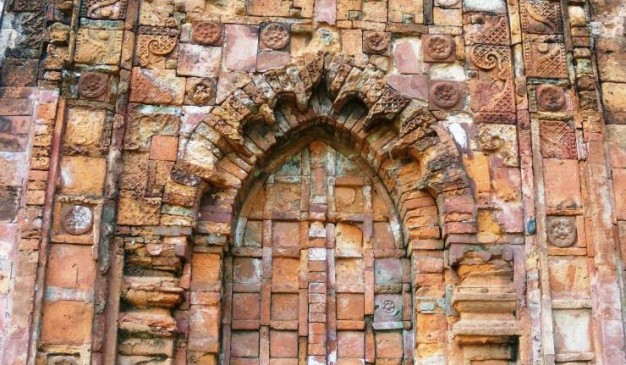
Munshiganj is a district of many Hindu Moths. Most of them are established near or more than 150 years ago. The moth may be abandoned but the architectural beauty like wall drawing/terracotta is still very beautiful. Another remarkable thing is that there are plenty of birds making the place as their nests. So, almost all the time you will hear birds humming. Parrots are seen rarely in the town area but in Hindu Moths, a lots of Parrots are seen chirping.
)
[3] => Array
(
[name] => Gouri Moth
[post_id] => 18737
[post_link] => http://offroadbangladesh.com/bn/places/gouri-moth/
[thumb_link] => http://offroadbangladesh.com/wp-content/uploads/2015/09/IMG_20150906_105800133.jpg
[post_content] =>
Gouri Moth (a sacred place dedicated to the culture of Krishna lifestyle) was established in 1943 in Barodia, Kalia, Narail. After a couple of renovations, it is still there to welcome the devotees of Lord Srikrishno. There are some other Gourio moths in entire Bangladesh too. The most prominent one is in Dhaka at Narinda/Wari area.
In 1943, Turyaswami established the original temple after which he put the idol of Radha-Krishno in it. In 1971, during the liberation war of Bangladesh, Pakistani Army destroyed almost everywhere temple in Bangladesh but luckily the Narail area was a base of Bangladeshi Freedom Fighters so that they did not manage to destroy the temple. However, the temple needed renovation, so another Guru (religious preacher) Santo Goswami made a reconstruction of the temple complex.
25 years ago, from Rajstan (India), a White Shiv Lingam has bought in here. Now it is a Shiv Temple too and people come to worship the lingam. It is made of White Marble which is only one of the tenth of its entire criterion in Bangladesh. To see another marble made white Shiv lingam, you need to visit the Rajshahi Barenda Museum or Khulna Divisional Museum.
Few years back, idol of new Radha-Krishno was brought into this temple as well. So, now the temple looks almost as a new structure but many people did not know that it is a historical place and also a heritage sight of Bangladesh especially for the hindu religious people. It is basically a Krishna Temple that means they worship Krishna mainly. In every year during the eve of Krishna's Birthday (Jonmastomi) they arrange a three days program to celebrate it. About 1000 local Hindu people attends the dinner (bhog/prosad) and they sings the holy krishna songs for the entire night.
)
)