Array
(
[0] => Array
(
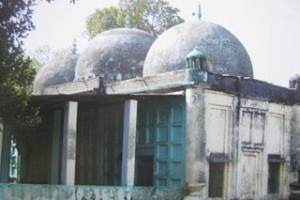
[name] => Hazrat Sayed Shah Rasti (R) Mazar & Mosque
[post_id] => 5151
[post_link] => http://offroadbangladesh.com/bn/places/hazrat-sayed-shah-rasti-r-mazar-mosque/
[thumb_link] => http://offroadbangladesh.com/wp-content/uploads/2015/03/Hazrat-Sayed-Shah-Rasti-R-Mazar-Mosque-by-Ekramul-300x225.jpg
[post_content] =>
Hazrat Sayed Shah Rasti (R.A) is a celebrated Sufi Muslim figure in Bengal. Shah Rasti's name is associated with the Muslim movement into north-eastern Bengal and the spread of Islam in Bangladesh. He spread Islam in Bangladesh through Sufism, part of the long history of travel between the Middle East, Central Asia, Indian Subcontinent and East Asia. He was buried in Chandpur, Bangladesh, formerly known as Shahrasti, while the Thana, post office, Upazila, and School are named in his honor.
Early life and education: Shahrast's date and place of birth is not certain. He was Born in Mecca, Arab and later moved to Bagdad, Iraq as a child with his family. He excelled in his studies a studied in Islamic study and Islamic theology. He achieved spiritual perfection (Kamaliyyah) after years of study and meditation.
Travel to India: According to legend, He came in India with a group of Muslim saints. All saints had a handful of soil, they had to choose to settle and propagate Islam in any place in India where the soil exactly matched. Shahrasti reached India in c.1300. He matched the soil with the soil of Camilla and stayed on a hill. But the place was wrong. After that, a tiger came to him to the right place where the soil exactly matched that later life.
During the later stages of his life, Shahrasti devoted himself propagating Islam. Under His guidance, thousands of Hindus and Buddhists converted to Islam. His brother Sayed Shah Mahbub and two companions were with him. He was unmarried; his Brother Shah Mahbub’s son Sayed Shah Giasuddin was his successor and descendant. His descendants are still living in beside the Dargah. He is buried in Chandpur in his Dargah (Tomb), which is located in Shahrasti, the area is named in his honor. His shrine is famous in Chandpur and throughout Bangladesh, with hundreds of devotes visiting daily.
)
[1] => Array
(
[name] => {:en}Tetulia Shahi Mosque{:}{:bn}তেতুলিয়া জামে মসজিদ{:}
[post_id] => 2028
[post_link] => http://offroadbangladesh.com/bn/places/tetulia-jami-mosque/
[thumb_link] => http://offroadbangladesh.com/wp-content/uploads/2015/02/Tetulia-Shahi-Mosjid-satkhira-021-300x225.jpg
[post_content] => {:en}
Tetulia Shahi Mosque is also known as the Khan Bahadur Salamatullah Mosque. This mosque was found by Khan Bahadur Maulvi Qazi Salamatullah Khan, the then Zamindar (feudal-lord) from Qazi family of Tetulia. He was also the founder of the mansion named Salam Manzil (now in ruins) in the vicinity. The six-domed mosque was built similar to Mughal style in 1858-59. Their resembles were built by Tipu Sultan's descendants, as does the Salam Manzil, now in virtual decay.
[This spot needs more detail. If you have more information and photos, please be advised to add in our website. Your name will be published as a Content Contributor]
{:}{:bn}খান বাহাদুর সালামতউল্লাহ মসজিদ এবং তেতুলিয়া শাহী মসজিদ নামে পরিচিত তেতুলিয়া জামে মসজিদটি সাতক্ষীরা জেলার তালা উপজেলার তেতুলিয়া গ্রামে অবস্থিত। তেতুলিয়ার কাজী পরিবারের জমিদার খান বাহাদুর মৌলভী কাজী সালামতউল্লাহ খান এই মসজিদটি নির্মাণ করেন। এছাড়া তিনি অত্র অঞ্চলে এক সময় অবস্থিত সালাম মঞ্জিলও প্রতিষ্ঠা করেন। ছয়গম্বুজ বিশিষ্ট এই মসজিদটি মুঘল স্থাপত্যশৈলীতে ১৮৫৮-৫৯ সালে নির্মাণ করা হয়। এই মসজিদটি এবং বর্তমানে ধ্বংসপ্রাপ্ত সালাম মঞ্জিলের সাথে টিপু সুলতানের উত্তরসূরিদের নির্মিত স্থাপনার মিল রয়েছে।{:}
)
[2] => Array
(
[name] => Nidariya Mosque
[post_id] => 4801
[post_link] => http://offroadbangladesh.com/bn/places/nidariya-mosque/
[thumb_link] => http://offroadbangladesh.com/wp-content/uploads/2015/03/Nidaria-Masque.11-300x200.jpg
[post_content] =>
Mughals subadar MANSUR KHAN donated 10.56 acres of land for Nidariya Mosque and built it in 1176. In that time there was Motayalli as Ijar Mahmood Sheikh, Bijara Sheikh Mahmud,and Khan Mahmud Sheikh. People says because Subedar Mansur Kha’s not of having dari(দাড়ী) for that the mosques was known as Nidariya. Now the local people pray in this mosque.
)
[3] => Array
(
[name] => Kellaband Mosque
[post_id] => 1907
[post_link] => http://offroadbangladesh.com/bn/places/kellaband-mosque/
[thumb_link] => http://offroadbangladesh.com/wp-content/uploads/2015/02/Kellaband-Mosque-300x200-300x200.jpg
[post_content] => This three-dome mosque is about 200 year’s elderly. A concrete well & an ancient cemetery are lying beside the mosque.
)
)