Array
(
[0] => Array
(
[name] => Kusumba Mosque
[post_id] => 3656
[post_link] => http://offroadbangladesh.com/bn/places/kusumba-mosque/
[thumb_link] => http://offroadbangladesh.com/wp-content/uploads/2015/02/84463426-300x199.jpg
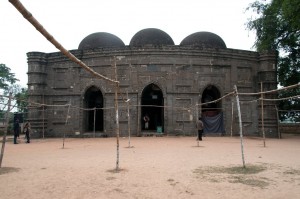
[post_content] => Kusumba Mosque is named after the village of Kusumba, under the Manda upazila of Naogaon district, on the west bank of the Atrai River. It is inside a walled enclosure with a monumental gateway that has standing spaces for guards. It was built during the period of Afghan rule in Bengal under one of the last Suri rulers Ghiyasuddin Bahadur Shah, by one Suleiman who was probably a high ranking official. The inscription tablet in Arabic (only the word ‘built by’ is in Persian) dating the building to 966 AH (1558-59 AD) is fixed over its eastern central entrance.
Although built during Suri rule, it is not influenced at all by the earlier Suri architecture of North India, and is well grounded in the Bengal style. The brick building, gently curved cornice, and the engaged octagonal corner towers are typical features. The mosque, presently protected by the Department of Archaeology of Bangladesh, was badly damaged during the earthquake of 1897. Although the main fabric of the building is of brick the entire exterior walls, and the interior up to the arches of the pendentives have stone facing. The columns, platform, floor, and perforated side screens are of stone. The mosque has a rectangular plan with three bays and two aisles, three entrances on the east and two each on the north and south sides.
The central mihrab is projected in the west. The interior west (qibla) wall has two mihrabs on the floor level opposite the central and southeastern entrances, but the one in the northwestern bay is above a raised platform ascended by a staircase on the east. The presence of such a platform in a non-imperial mosque indicates that not only royalty, but nobility and high-ranking officials were also separated from the general public during prayers. The mihrabs have elaborate stone carving. They have cusped arches crowned with kalasa (water pot) motifs, supported on intricately carved stone pillars which have projections and tasseled decorations hanging from chains. Bunches of grapes and vines curve in an almost serpentine manner on the mihrab frames, and kalasas, tendrils and rosettes are reduced to dots.
The platform edge has grape vine decoration, and there are rosettes on the spandrels of the arches supporting the platform, as well as on the mihrab wall. The stone used in the exterior facing is of a coarse quality and carved in shallow relief. Mouldings are most prominent decorative feature on the outside. They divide the walls into upper and lower sections, run all along the curved cornice, around the corner towers, in a straight line below the cornice, and frame the rectangular panels in the east, south and north walls. The spandrels of the central entrance arch are filled with small kalasa and rosette motifs. The north and south sides have screened windows.
)
[1] => Array
(
[name] => {:en}Dhanbari Nawab Manzil{:}{:bn}ধনবাড়ি নবাব মনজিল{:}
[post_id] => 5262
[post_link] => http://offroadbangladesh.com/bn/places/dhanbari-nawab-manzil/
[thumb_link] => http://offroadbangladesh.com/wp-content/uploads/2015/03/dhanbari-nawab-bai-Md.Rokanuzzaman1-300x240.jpg
[post_content] => {:en}
Dhanbari Nawab Manzil (ধনবাড়ি নবাব মনজিল) is locally known as Nawab Bari (নবাব বাড়ী). This is now owned by the descendants of Nawab Ali Chowdhury (নবাব আলী চৌধুরী). They have been taking a good care of this palace and also built several cottages inside the premise for the tourists for staying. This is the only heritage resort from our Bangladesh. This is also known as Dhanbari (ধনবাড়ী) Royal Resort. Inside the premise is very much neat and clean, adequate amount of stuffs and guards are around there to take care of everything.
Most of the Zamindar (জমিদার) mansions from Bangladesh were owned by the Hindu Zamindar (জমিদার). After the division of the country during 1947, and also later 1971, most of those powerful owners were coerced to leave the country, or cringed away to avoid the secular vandalism. Which results their mammoth mansions left unprotected. Later government has taken control of few of those buildings and used as their official purpose (which are still in a presentable state). But others are in total ruin by now a days for lack of care.
But this Nawab (নবাব) Palace is totally different from those. As it was owned by the Muslim landlords, they didn't have to leave the country or had nothing to fear. They were powerful during their ruling period. And yet still they are powerful on that region now a days. That's why this palace is still in a very good condition and has been taken proper care to maintain its state.
This palace was built by the Nawab Ali Chowdhury (নবাব আলী চৌধুরী) during 1919 to invite the British Lord Ronaldshay. He Came near Koyra (কয়ড়া) using the Steamer and had a reception with 30 elephants. [Reference: www.dctangail.gov.bd].
One of the decedents from the Nawab (নবাব) Family named Nawab Hasan Ali Chowdhury (নবাব হাসান আলী চৌধুরী) was the Industrial Minister during the reign of East Pakistan. Also he was a member of the Parliament during 1978. Later, after his death, his daughter Saiyeda Asheka Akbar (সৈয়দা আশেক আকবর) was the member of the Parliament during 1981. This information will give you an idea about their power and now you understand why the palace is still in a good condition.
You'll require to buy a ticket for 30 Taka to enter inside the palace premise. Each ticket is valid for 2 hours of visiting. The area is highly secured and the stuffs and guards around there are very much friendly. No unauthorized entries are entertained there. So no one will bother you while you are enjoying the surroundings.
{:}{:bn}
ধনবাড়ি নবাব মঞ্জিল স্থানীয়ভাবে নবাববাড়ি নামে পরিচিত। বর্তমানে নবাব আলী চৌধুরীর উত্তরসূরিরা এই রাজবাড়ির দেখাভাল করছেন এবং পর্যটকদের অবস্থানের জন্য তারা এখানে কয়েকটি কটেজও নির্মাণ করেছেন। বাংলাদেশের একমাত্র ঐতিহ্যবাহী রিসোর্ট এটি। পরিষ্কার পরিচ্ছন্ন এই রাজবাড়িতে বেশ কয়েকজন কর্মচারী সবকিছুর দেখাশোনা করছে।
বাংলাদেশের বেশীরভাগ জমিদারবাড়ির মালিক ছিলেন হিন্দু জমিদারেরা। ১৯৪৭ সালে দেশ বিভাগের পর এবং ১৯৭১ সালে মুক্তিযুদ্ধের পর এদের মাঝে বেশীরভাগ প্রভাবশালী জমিদারেরাই দেশত্যাগ করতে বাধ্য হন অথবা ধর্মীয় গোঁড়ামির কারনে তাঁদের একঘরে করে দেওয়া হয়। এর ফলে এসব জমিদারবাড়ি অরক্ষিত অবস্থায় থেকে যায়। পরবর্তীতে কিছু জমিদারবাড়ি সরকার অধিগ্রহন করে তাঁদের দাপ্তরিক কাজে ব্যবহার করলেও বাদবাকি জমিদারবাড়িগুলো অযত্ন এবং অবহেলায় ধ্বংসের মুখে রয়েছে।
ধনবাড়ি নবাব মঞ্জিল অন্যান্য জমিদারবাড়ির চেয়ে ভিন্ন। মুসলিম জমিদার এই বাড়িটির মালিক হওয়াতে তাঁদের দেশত্যাগ করতে হয়নি। তাঁরা তাঁদের শাসনকালে যেমন ক্ষমতাধর ছিল তেমনি এখনও নিজ নিজ অঞ্চলে তাঁদের প্রভাব বিদ্যমান। আর এ কারনেই তাঁদের মালিকানার জমিদারবাড়িগুলোর অবস্থা এখনও বেশ ভাল এবং এসব জমিদারবাড়ির যথাযথ যত্ন ও রক্ষনাবেক্ষন করা হচ্ছে।
১৯১৯ সালে ইংরেজ লর্ড রোনাল্ডশ্যকে আমন্ত্রন জানাতে নবাব আলী চৌধুরী এই জমিদারবাড়িটি নির্মাণ করেন। লর্ড রোনাল্ডশ্য স্টিমারে করে কয়ড়ার কাছে এসেছিলেন এবং তাঁকে ৩০টি হাতির মাধ্যমে অভ্যর্থনা জানানো হয়েছিল। [সূত্র: www.dctangail.gov.bd];
নবাব পরিবারের একজন উত্তরসূরী নবাব হাসান আলী চৌধুরী পূর্ব পাকিস্তানের শিল্প মন্ত্রী ছিলেন। এছাড়া ১৯৭৮ সালে তিনি একজন সংসদ সদস্যও ছিলেন। নবাব হাসান আলী চৌধুরীর মৃত্যুর পর ১৯৮১ সালে তাঁর কন্যা সৈয়দা আশেক আকবর সংসদ সদস্য নির্বাচিত হন। উপরোক্ত তথ্য আপনাকে এই নবাব পরিবারের প্রভাব ও ক্ষমতা সম্পর্কে ধারনা দেবে এবং আপনি বুঝতে পারবেন আজও কিভাবে এই নবাবমঞ্জিল এতোটা ভাল অবস্থায় রয়েছে।
ধনবাড়ি নবাব মঞ্জিলে প্রবেশ করতে আপনাকে ৩০/- টাকা দামের টিকেট কাটতে হবে। প্রতিটি টিকেট নবাব মঞ্জিলে প্রবেশ করার দুই ঘণ্টা পর্যন্ত কার্যকর থাকবে। নবাব মঞ্জিলের নিরাপত্তা ব্যবস্থা বেশ কঠোর এবং এখানকার কর্মচারীরা বেশ সাহায্যপরায়ন। এখানে বাইরের কাউকে প্রবেশ করতে দেওয়া হয় না তাই আপনি নির্বিঘ্নে নবাব মঞ্জিল ঘুরে দেখতে পারবেন।
{:}
)
[2] => Array
(
[name] => House of Brajen Munshi
[post_id] => 6440
[post_link] => http://offroadbangladesh.com/bn/places/house-of-brajen-munshi/
[thumb_link] => http://offroadbangladesh.com/wp-content/uploads/2015/04/House-of-Brajen-Munshi-300x200-300x200.jpg
[post_content] =>
Munshi Bari is situated at Dhoroni union from 7 km north-east of Ulipur sub district in Kurigram district. Brajen Munshi Agent of landlord Subarnamayi established this house for his one use. An inscription of a building beside the house established by Brajen Munshi indicate the established date 1880 A.D. From here, it is assumed that house of Brajen Munshi was built from few days before of that building. Now this building use for union Tahasil office.
[This spot needs more detail. If you have more information and photos, please be advised to add in our website. Your name will be published as a Content Contributor]
)
[3] => Array
(
[name] => Hussaini Dalan
[post_id] => 7309
[post_link] => http://offroadbangladesh.com/bn/places/hussaini-dalan/
[thumb_link] => http://offroadbangladesh.com/wp-content/uploads/2015/04/hussaini_dalan1-300x225.jpg
[post_content] =>
Hussaini Dalan (হোসেনী দালান), some people pronounce as Hosaini Dalan, is another edifice from Dhaka. This is located beside the Nazimuddin Road of Old Dhaka. It is believed as a Shia Shrine, and was built during 17th century. There is a pond in front of the building.
It was built by Syed Murad during the governorship of Shah Shuja to commemorate the martyrdom of Al-Hussain, the grandson of our holly prophet Muhammad. Shah Shuja was a Sunni Muslim, but he had a predilection for Shia and patronized several such institutions.
 This building has gone through several renovation and none of its antiquity left for the visitors. People only used to visit this place for its historical value. During the British period it was repaired heavily at 1807 and 1810. Also during the massive earthquake of 1897 caused a severe damage over this edifice. Now a days it just looks like a modern day's building covering with rich tiles with heavy ornate. The Photograph was taken by Fritz Kapp in 1904 with a view of the Imambara Hussaini Dalan in Dacca (now Dhaka), overlooking the tank.
During the first 10 days of Muharram, Shia people used to gather at this place to mourn for Al-Hussain. Though it’s a festival of Shia people, but local Sunni people used to join with them and bemoan with them. This ends at the day of Ashura. More about this building and festival is available at Wikipedia.
)
)