Shahjalal University of Science and Technology
Type: School / College / University
Contributed By: Nayeem ,Shahnoor Habib Munmun,Saiful Aziz Shamseer,Kazi Moitry


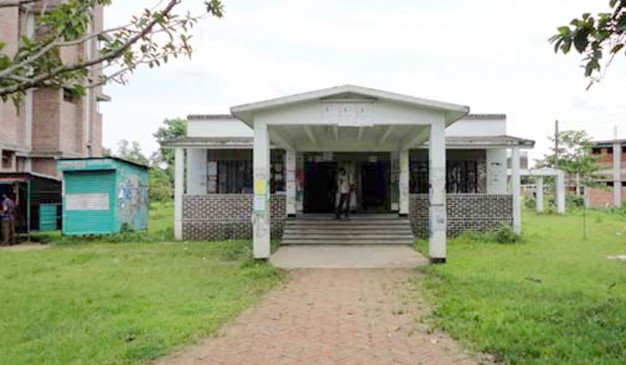


Brief
Shahjalal University of Science and Technology (Bengali: শাহজালাল বিজ্ঞান ও প্রযুক্তি বিশ্ববিদ্যালয়) also known as SUST is a state supported not-for-profit research university located in Sylhet, Bangladesh. It is also one of the nine PhD granting research universities of Bangladesh.
The university was founded by the Government of Bangladesh according to a university act in 1986 to give special importance in science and technology education. It is the first specialized science & technology university of the country. After SUST, seven more science and technology universities have been established in Bangladesh.
SUST is traditionally known for research and education in the physical sciences and engineering. It is one of the most selective higher learning institutions, and received 40,881 undergraduate applicants for 2012-2013 session—only admitting 1,385, an acceptance rate of 3.39%.
Shahjalal University of Science and Technology was established in 1986. The campus is located in Kumargaon, approximately five kilometers away from the heart of Sylhet City Centre. The university started its academic programme with three departments: physics, chemistry and economics. The first convocation of SUST was held on 29 April 1998 and the second convocation held on 6 December 2007.
SUST is the first university in Bangladesh providing whole campus free Wi-Fi access for students & staffs. The university introduced an integrated honors course for the first time in Bangladesh and it introduced the semester system (American credit system) from the 1996-97 session. According to the masterplan for the university, within a few years Shahjalal University of Science and Technology will be one of the finest institutions of the region.
The university students invented and introduced the paperless 24/7 SMS Based Automated Registration of Admission Test procedure for the first time in Bangladesh. Interested students can complete the registration process through mobile phone messages. The contemporary government launched the system on 13 September 2009. For the invention, the University won an Ambillion Award in a competition of South Asian countries in 2010 and National Award for E-Content and ICT for Development Award 2010. Now, most of the public universities in Bangladesh have adopted this process of registration.
How to go
It is located in University Avenue in University Avenue on Sylhet-Sunamganj highway. You have to take CNG auto rickshaw or local bus to Major Tila from the main town.
How To Reach: Sylhet District
Three type of transportation mode is available towards Sylhet from Dhaka. You can get in there by bus, train or air.
1. Greenline Paribahan
9/2, Outer Circular Road, Rajarbag, Dhaka-1217. (BDT 850 Volvo, BDT 1100 Scania)
2. Shyamoli Paribahan
Arambagh Counter, Dhaka. Phone-7102291, 0193626023
Sayedabad Counter, Dhaka. Phone-0171-8075541, 7511019, 7550071
3. Hanif Paribahan, Dhaka offices
Panthapath: 0173-402670
Arambagh: 01713-402671
Sayedabad: 01713-402673
4. S Al Saudia
Address: Humayun Rashid Chattar, Sylhet
Mobile: 01712920909
5. Shohah Paribahan
Address: Shobhani Ghat, Sylhet
Phone: 0821-722299
Fare: Taka 1100
You will find the above bus operators from Malibag Rail-gate, Razarbag or Sayedabad bus stand. These services are available from 6:30 am to 11:30 pm.
Bangladesh Biman, NovoAir, United Airways and Regent Airways are the four operators who fly from Dhaka to sylhet. The ticket price starts from 3000 taka & it goes up to 8000 taka per pax. There are more than 10 flights every day from morning to evening.
The planes leaving Dhaka for Sylhet are
1. United Airlines
Departure from Dhaka-5:35PM on Friday: 2:20PM
Departure from Sylhet-6:45PM on Friday-3:30PM
(Schedule varies time to time)
Fair-One way BDT 3825- 6325
2. Regent Airways.
Departure from Dhaka-4:40PM
Departure from Sylhet-5:45PM
(Schedule varies time to time)
Fair-One fair ranges from BDT 4800-5700
3. Bangladesh Biman. Price of tickets ranges from BDT 3500-9940 (Single flight per day)
There are four train services from Dhaka to sylhet. They are Joyontika, Parabat and Upoban depart at morning, noon and evening. There is a new train named Kalini depart at afternoon from Dhaka. It takes 7-8 hours to reach sylhet.The ticket price is around 295 for shovon-chair & it gets 679 taka for 1st class AC.
Train Schedules:
1. Kalini Express– departure time from Dhaka-4:00PM, arrival time at Sylhet-10:30PM.Off day: Friday
2. Parabat Express– departure time from Dhaka-6:40AM, arrival time at Sylhet-1:35PM
Departure time from Sylhet-3:00PM, arrival time at Dhaka-10:30PM. Off day: Tuesday
3. Upaban Express– departure time from Dhaka-9:50PM, arrival time at Sylhet-5:30AM
Departure time from Sylhet-10:00PM, arrival time at Dhaka-5:30AM.
Off day: Wednesday in Dhaka, no off days in Sylhet
4. Joyntika Express– departure time from Dhaka-12:00PM, arrival time at Sylhet-7:50PM
Departure time from Sylhet-08:20AM, arrival time at Dhaka-4:00PM.
Off day: None
Fair of all these ranges according to compartments usually BDT 75-1018.
Where to Stay
There are a number of good quality hotels in Sylhet town. Most of those are at the Mazar road, Amberkhana, or in Zindabazar. A brief list of hotels is given below:
1. Hotel Eastern Gate & Panahar Restaurant.
2. Hotel Gulshan.
3. Hotel Dargah View.
4. Greenland Hotel & Restaurant.
5. Hotel City Link International.
6. Surma Valley Rest House.
7. Hotel Baharain Residential
8. Hotel Qureishi Residence.
9. Hotel Ajmeer.
10. Hotel Payra.
11. Hotel Supreme,
12. Hotel Palash,
13. Hotel Western,
14. Hotel Anurag,
15. Hotel Al-Amin,
16. Hotel Garden’s Inn,
17. Hotel Ferdous,
18. Hotel Panama,
19. Hotel Green,
20. Hotel Hilltown,
21. Hotel Rose View,
22. Hotel Star Pacific,
23. Hotel Tajmohal.
Things to do
University campus itself an interesting location to visit. You can view buildings located inside the campus. This university has a great touch of nature as it is a little bit far from the main town. You can observe the daily life of the students & stroll about the departments.
Eating Facilities
Quality food is available at the university canteen. You can go to the different canteens in different faculties.


