Brief
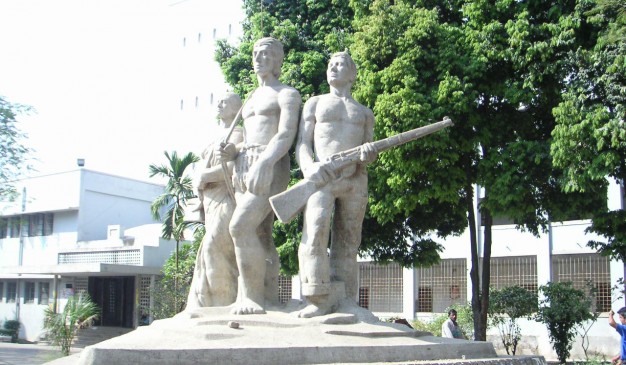
The University of Dhaka (ঢাকা বিশ্ববিদ্যালয়), also known as Dhaka University or simply DU, is the oldest university in modern Bangladesh. Established during the British Raj in 1921, it gained a reputation as the “Oxford of the East” during its early years and has been a significant contributor to the modern history of Bangladesh. After the partition of India, it became the focal point of progressive and democratic movements in Pakistan. Its students and teachers played a central role in the rise of Bengali nationalism and the independence of Bangladesh.
The university’s distinguished alumni include Satyendra Nath Bose (pioneer of Bose–Einstein statistics), Fazlur Rahman Khan (pioneer of modern structural engineering), Muhammad Yunus (winner of the 2006 Nobel Peace Prize), Vijayaraghavan (co-discoverer of the PV number), Rehman Sobhan (social democratic economist), Buddhadeb Bose (20th century Bengali poet) and Sheikh Mujibur Rahman (the founding father of Bangladesh). It also enjoyed associations with Kazi Nazrul Islam, Rabindranath Tagore and Faiz Ahmed Faiz.
Before Dhaka University was established, near its grounds were the former buildings of Dhaka College. But in 1873 the university was relocated to Bahadur Shah Park. Later it shifted to Curzon Hall, which would later become the first institute of the University of Dhaka.
The establishment of the university was a compensation of the annulment of the 1905 Partition of Bengal. The partition had established East Bengal and Assam as a separate province, with Dhaka as its capital. However, the partition was abolished in 1911.
In 1913, public opinion was invited before the university scheme was given its final shape. The secretary of state approved it in December 1913. The first vice-chancellor of the university, Dr. Philip Joseph Hartog, formerly academic registrar of the University of London for 17 years was appointed.
During the opening of the University, Joseph Hartog made this speech in honour of the university:
“A man may be an excellent teacher of elementary subjects without the power to add to knowledge. But in advanced work I maintain that no one can really teach well unless he has the combination of imagination with critical power which leads to the original production (of knowledge), and for that if for no other reason, a university to be a true university must see that its teachers are men who are also capable of advancing knowledge.”
Established in 1921 under the Dacca University Act 1920 of the Indian Legislative Council, it is modelled after British universities. Academic activities started on July 1, 1921 with 3 Faculties: Arts, Science and Law; 12 Departments: Sanskrit and Bengali, English, Education, History, Arabic and Islamic Studies, Persian and Urdu, Philosophy, Economics and Politics, Physics, Chemistry, Mathematics, and Law; 3 Dormitories for students: Salimullah Muslim Hall, Dacca Hall and Jagannath Hall.
The university later played a significant role in the Bengali Language Movement, when Bengalis joined together to fight against Urdu being the official language in East Pakistan. Dhaka University was the main place where the movement started with the students joining together and protesting against the Pakistan government. Later countless students were massacred in where the Shaheed Minar stands today. After the incident, Bengali was restored as official language.
Where to Stay
There are more than 71 quality hotel in Dhaka. Some are listed below…
1. Pan Pacific Sonargaon Hotel, Dhaka
107 , Kazi Nazrul Islam Avenue
Dhaka, Bangladesh
Tel: +880 2 811 1005
Website : Pan Pacific Sonargaon Hotel, Dhaka
2. Ruposhi Bangla Hotel
1 Minto Road, Shahbagh, Dhaka,
Bangladesh.
Phone : 88-02-8330001
Fax : 88-02-8312975
Email : sales@ruposhibanglahotel.com
Website : Ruposhi Bangla Hotel
3. Radisson Water Garden Hotel, Dhaka
Airport Road, Dhaka Cantonment,
Dhaka 1206 Bangladesh.
Telephone: + 88 02 8754555
Fax: + 88 02 8754554 , + 88 02 8754504
Email : reservations.dhaka[at]radisson.com
Website : Radisson Water Garden Hotel
Dhaka Bangladesh
4. Dhaka Regency Hotel & Resort
Airport Road, Nikunja 2
Dhaka 1229, Bangladesh.
Phone : +88-02-8913912, +880 2 8900250-9
Fax : +88-02-8911479
Email : info@dhakaregency.com
Website : www.dhakaregency.com
5. Best Western La Vinci Hotel, Dhaka
54, Kawran Bazar,
Dhaka-1215, Bangladesh
Phone No : 880-2-9119352
Fax No : 880-2-9131218
E-mail : lavinci[at]bol-online.com ,
reservation[at]lavincihotel.com
Web : www.lavincihotel.com
6. The Westin Hotel
Main Gulshan Avenue,
Plot-01, Road 45, Gulshan-2
Dhaka-1212, Bangladesh
Phone : 88-02-9891988
7. Royal Park Residence Hotel
House no. 85, Road no. 25A
Block – A, Banani,
Dhaka 1213 Bangladesh.
Telephone: + 88 02 8815945/46
Fax: + 88 02 8815299
Email : hotelinfo[at]royalparkbd.com
Website : Royal Park Residence Hotel
8. Bengal Inn
House # 07, Road # 16,
Gulshan – 01
Dhaka 1212 Bangladesh.
Tel: +880 2 98880236, 9880610
Fax: +880 2 9880274
Email : info[at]bengalinn.com
Website : www.bengalinn.com
9. Hotel Sarina Dhaka
Plot #27, Road #17
Banani C/A,
Dhaka 1213 Bangladesh.
Tel: +880 2 8859604 -10, 8851040 -2, 8851011-4
Fax: +880 2 988-9989
Email : sales[at]sarinahotel.com, reservations[at]sarinahotel.com
Website : www.sarinahotel.com
Array
(
[0] => Array
(
[name] => Open University
[post_id] => 3167
[post_link] => http://offroadbangladesh.com/places/open-university/
[thumb_link] => http://offroadbangladesh.com/wp-content/uploads/2015/02/offroadbangladeshlogo2-300x178.png
[post_content] => The need for an open university in Bangladesh was felt long ago. The history of distance education in Bangladesh dates back to 1956, when the Education Directorate was assigned with the responsibility for distribution of 200 radio receivers to educational institutions. This led to the creation of an Audio-Visual Cell, which was upgraded to Audio-Visual Education Centre in 1962. No further progress in distance education was made till 1971.
After Independence, Bangladesh faced the challenge of meeting the educational needs of mass people. To meet this challenge the necessity for a new mode of education was widely felt. As a sequel to that feeling, the School Broadcasting Pilot Project was launched in 1978. The project was transformed into National Institute of Educational Media and Technology (NIEMT) in 1983. NIEMT was later replaced by the Bangladesh Institute of Distance Education (BIDE) in 1985. Apart from producing audio-visual materials, BIDE offered the Bachelor of Education (B.Ed) program in distance mode. The success of BIDE encouraged policymakers to take up a major plan for establishing an open university. The plan became a reality in October 1992 when the Bangladesh Open University Act 1992 was passed in the Parliament.
)
[1] => Array
(
[name] => {:en}Hemnagar Zamindar Bari{:}{:bn}হেমনগর জমিদার বাড়ি{:}
[post_id] => 5284
[post_link] => http://offroadbangladesh.com/places/hemnagar-zamindar-bari/
[thumb_link] => http://offroadbangladesh.com/wp-content/uploads/2015/03/Hemnagar-Zamindar-Bari2-LonelyTraveler1-300x225.jpg
[post_content] => {:en}
Hemnagar Zamindar Bari (হেমনগর জমিদার বাড়ি) is a less highlighted edifice from Bangladesh. Not that much tourists use to travel here despite of having everything to become a promising tourist attraction from Bangladesh. Only local people from around use to visit here. It was built by the prominent Hindu Zamindar (জমিদার) from Tangail (টাংগাঈল) district named Hemchandra Choudhury (হেমচন্দ্র চৌধুরী) at 1890.
The Main building at the front side has two small statues of angel at the top. That's why local people know this as Porir Dalan (পরীর দালান) which means a Palace of Angel. Main building of this Zamindar Bari (জমিদার বাড়ি) is currently using as an administrative building of Hemnagar (হেমনগর) Degree College, but the other buildings at the back side is empty right now. There it has approximately 25 rooms inside.
Front side of the building is having the best styles from the whole premise. It is highly ornate at the walls using colorful glasses. Every inches of the walls, pillars, and the archways are flourished with flowers, vines, stars, etc formed using those colorful glasses.
The Zamindar (জমিদার) was slight cruel and rude on the peasants. They were coerced to follow few rules. For example, if anyone wanted to pass this palace premise, he/she must had to continuously keep vowing and walking backwards with bare feet. Such things must have poured the heart of locals with hatred and grief. That's why the powerful Zamindar (জমিদার) had to escape from the place during the country's separation. Along with the buildings, the whole premise was having 7 massive ponds (only few are right now available). Local people say those 7 ponds are for the seven ladies (daughters and sisters of the Zamindar). Dhonbari Zamindar Bari is very near from this place.
{:}{:bn}
বাংলাদেশের অন্যতম আকর্ষণীয় পর্যটনস্পটে পরিনত হওয়ার সকল যোগ্যতা থাকার পরও হেমনগর জমিদার বাড়ি খুব একটা সুনাম অর্জন করতে পারেনি এবং খুব বেশি পর্যটকও এখানে আসেন না। মূলত এখানকার আশেপাশে স্থানীয় বসবাসকারীরা এখানে আসেন। ১৮৯০ সালে টাঙ্গাইলের বিশিষ্ট হিন্দু জমিদার হেমচন্দ্র চৌধুরী এই জমিদারবাড়িটি নির্মাণ করেন।
জমিদারবাড়ির মূল ভবনের সামনে দুটি পরীর ছোট মূর্তি রয়েছে আর এ কারনেই স্থানীয়রা এই জমিদারবাড়িকে বলে থাকে পরীর দালান। এই জমিদারবাড়ির মূল ভবনটি বর্তমানে হেমনগর ডিগ্রী কলেজের প্রশাসনিক ভবন হিসেবে ব্যবহার করা হচ্ছে তবে এখানকার পেছনদিকে অবস্থিত ভবনটি বর্তমানে খালি পড়ে আছে। জমিদারবাড়ির অভ্যন্তরে প্রায় ২৫টি কক্ষ আছে।
জমিদারবাড়ির সামনের দিকটি সবচেয়ে দৃষ্টি নন্দন। রঙ্গিন কাচ দিয়ে ভবনের দেয়ালে নকশা করা হয়েছে। জমিদারবাড়ির দেয়াল, পিলার, ফটকের প্রতিটি ইঞ্চিতে রঙ্গিন কাঁচ ব্যবহার করে ফুল, তারা, গাছ ইত্যাদি সৃষ্টি করা হয়েছে।
জমিদার তার এলাকার মানুষকে কঠোর হাতে শাসন করতেন এবং তাঁদের কিছু নিয়ম মানতে বাধ্য করা হত যেমনঃ কাউকে জমিদারবাড়ির মধ্যে দিয়ে অতিক্রম করতে হলে তাঁকে খালি পায়ে ক্রমাগত মাথা ঝুঁকিয়ে আনুগত্য প্রকাশের পাশাপাশি উল্টো হয়ে হাটতে হত এবং এ কারনে স্থানীয়দের মনে জমিদারের উপর চরম ক্ষোভ ও ঘৃণার সৃষ্টি হয়। এই ঘৃণা এবং অসন্তোষের পরিপ্রেক্ষিতে জমিদার দেশবিভাগের সময় জমিদারবাড়ি থেকে পালিয়ে যান।
মূল জমিদারবাড়ির পাশাপাশি এখানে সাতটি বিশালাকারের পুকুর ছিল যেগুলোর মধ্যে মাত্র কয়েকটি বর্তমানে টিকে রয়েছে। স্থানীয়রা বলে থাকে যে সাতটি পুকুর ছিল জমিদারের সাত ছেলে মেয়ের জন্য। ধনবাড়ি জমিদারবাড়ি এখান থেকে বেশ নিকটে অবস্থিত।
{:}
)
[2] => Array
(
[name] => Ishwar Chandra High School
[post_id] => 15702
[post_link] => http://offroadbangladesh.com/places/ishwar-chandra-high-school/
[thumb_link] => http://offroadbangladesh.com/wp-content/uploads/2015/08/I-C-high-School-3-300x188.jpg
[post_content] =>
Ishwar Chandra High School (ঈশ্বর চন্দ্র উচ্চ বিদ্যালয়) is situated at Saturia Upazila of Manikganj District, very near to the Baliati Palace. This school was named after Ishwar Chandra Ray Chowdhury, one of the famous Zamindars in Baliati. According to the locals, this school was found by Horendra Kumar Ray in the year 1915-1916. From the history, it can be said that Horendra Kumar Ray was the Son of Ishwar Chandra Ray Chowdhury. Once, this school was named as Ishwar Chandra English High School, but in later time, the name has been changed.
It is said that Horendra Kumar Ray Chowdhury spent around fifty thousands taka at that time to build this ornamented & large school building. which was certainly a big amount to pay at that contemporary time. In recent time, this school has been conducted by a committee consisting of local people.
)
[3] => Array
(
[name] => BUET
[post_id] => 7606
[post_link] => http://offroadbangladesh.com/places/buet/
[thumb_link] => http://offroadbangladesh.com/wp-content/uploads/2015/04/Dept._of_Architecture-Uploaded-by-Shb921-300x225.jpg
[post_content] =>
Bangladesh University of Engineering and Technology (বাংলাদেশ প্রকৌশল বিশ্ববিদ্যালয়), commonly known as BUET (বুয়েট), is a Public Engineering University in Bangladesh. It is the oldest Engineering institution in the region.
In this institution, every year around 1000 students get enrolled in undergraduate and postgraduate programs to study engineering, architecture, and planning. In undergraduate admission test, only about top 17% students can get admitted among 8,000 selected candidates. The total number of teachers are about 500. The University has continued to expand over the last three decades. This includes the construction of new academic buildings, auditorium complex, halls of residence.
"Dhaka Survey School" was established in 1876 as a survey school at Nalgola, in Old Dhaka to train surveyors for the then Government of Bengal of Hindustan. Later, generous grants from Nawab Ahsanullah, a renowned Muslim patron of education and member of the Nawab family of Dhaka, enabled it to expand as a full-fledged engineering school. In recognition of this contribution, the school was renamed to "Ahsanullah School of Engineering". It offered three-year diploma courses in Civil Engineering, Electrical Engineering and Mechanical Engineering. It was moved to its present premises in 1912.
After the partition of India in 1947, it was upgraded to "Ahsanullah Engineering College", as a Faculty of Engineering under the University of Dhaka, offering four-year bachelor's course in Civil, Electrical, Mechanical, Chemical and Metallurgical engineering.
In 1962, it was renamed as East Pakistan University of Engineering and Technology (EPUET). A partnership with the Agricultural and Mechanical College of Texas (renamed Texas A&M University in 1963) was forged, and professors from A&M came to teach and to formulate the curriculum. During this period, EPUET offered courses in Mechanical, Electrical, Civil, Metallurgical, Chemical engineering and Architecture. After the liberation war of 1971, Bangladesh became independent, and EPUET was renamed to Bangladesh University of Engineering and Technology (BUET).
Several more departments to offer graduate and undergraduate courses in different subjects- Water Resources Engineering, Naval architecture & Marine engineering, Industrial & Production Engineering, Petroleum & Mineral Resources Engineering, Computer Science & Engineering, Glass and Ceramic Engineering- were included in the university at different times. In 2007, BUET celebrated 60 years (1947-2007) of engineering education in Bangladesh by arranging a 6 month long series of programs and events.
)
)