Brief
রাজধানী ঢাকার দক্ষিনপশ্চিম অংশে বুড়িগঙ্গা নদীর তীরে গর্বের সাথে দাড়িয়ে আছে ১৭শ শতকের অসমাপ্ত মুঘল দুর্গ লালবাগ কেল্লা (আওরঙ্গবাদ দুর্গ নামেও পরিচিত)। ১৬৭৮ সালে সম্রাট আওরঙ্গজেবের তৃতীয় পুত্র মুঘল সুবেদার মুহাম্মদ আজমশাহ কেল্লাটির নির্মাণকাজ আরম্ভ করেন। তিনি বাংলায় ১৫ মাস অবস্থান করেন। সম্রাট আওরঙ্গজেবের ডাকে বাংলা ত্যাগ করার সময় কেল্লার নির্মাণ সমাপ্ত হয়নি।
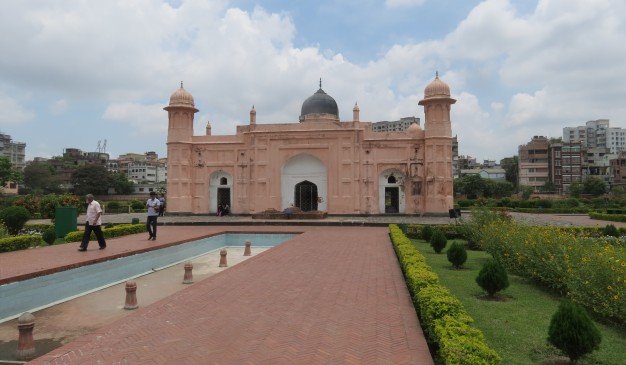
পরবর্তীতে আজমশাহর উত্তরসূরি শায়েস্তা খান ঢাকার নতুন সুবেদার নিযুক্ত হন। তবে তিনিও কেল্লাটির নির্মাণকাজ শেষ করতে পারেননি। ১৬৮৪ সালে শায়েস্তা খানের কন্যা ইরান দুখত পরীবিবি এখানেই মৃত্যুবরণ করেন। কন্যার মৃত্যুর পর শায়েস্তা খান কেল্লাটিকে অশুভ মনে করে এটির নির্মাণ অসমাপ্ত রাখেন। লালাবাগ কেল্লার তিনটি প্রধান স্থাপনার মধ্যে পরীবিবির মাজার অন্যতম।
শায়েস্তা খান ঢাকা ত্যাগের পর কেল্লাটির জনপ্রিয়তা কমে যায় কারন এসময় ঢাকা থেকে মুর্শিদাবাদে রাজধানী স্থানান্তর করা হয়। মুঘলদের রাজত্ব শেষ হলে কেল্লাটিকে পরিত্ত্যাক্ত করা হয়। ১৮৪৪ সালে আওরঙ্গবাদের বদলে এলাকাটির নামকরন করা হয় লালবাগ এবং সেই সাথে কেল্লাটির নামও হয়ে যায় লালবাগ কেল্লা।
দুটি ফটক এবং ক্ষতিগ্রস্ত প্রতিরক্ষা দেয়ালের অংশসহ দীর্ঘদিন ধরে মনে করা হত যে কেল্লাটিতে তিনটি ভবন (মসজিদ, পরীবিবির মাজার এবং দিওয়ান-ই-আম) রয়েছে। তবে বাংলাদেশের প্রত্নতাত্ত্বিক অধিদফতর সাম্প্রতিক সময়ে কেল্লায় খননকাজ করলে আরও নতুন স্থাপনার অস্তিত্ব সম্পর্কে জানা যায়।
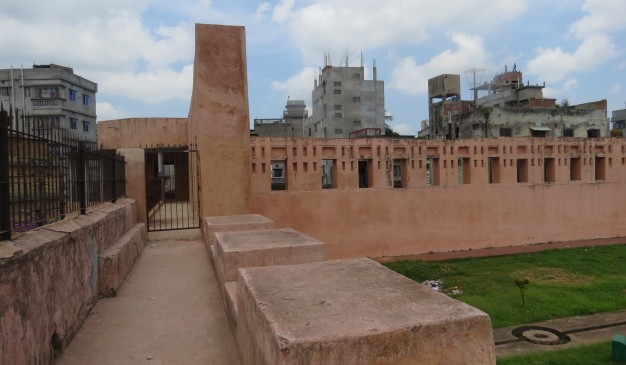
কেল্লার দক্ষিনদিকের প্রতিরক্ষা দেয়ালের দক্ষিণপশ্চিম কোনায় একটি বিশাল বুরুজ রয়েছে। দক্ষিনদিকের প্রতিরক্ষা দেয়ালের উত্তরে কিছু ভবন ছিল এবং পশ্চিম অংশে ঝর্ণাসহ একটি চমৎকার বাগান ছিল। কেল্লার বাসিন্দাদের থাকার ব্যবস্থা ছিল পশ্চিমের প্রতিরক্ষা দেয়ালের পূর্বদিকে অর্থাৎ মসজিদের দক্ষিন-পশ্চিমে।
কেল্লার দক্ষিনের প্রতিরক্ষা দেয়ালে সমান দূরত্বে দোতলা উচ্চতার সমান পাঁচটি বুরুজ রয়েছে এবং পশ্চিমের প্রতিরক্ষা দেয়ালে দুটি বুরুজ রয়েছে। দক্ষিনদিকের মূল ফটকের কাছে সবচেয়ে বড় বুরুজটি অবস্থিত। প্রতিটি বুরুজের সাথে মাটির নীচে অবস্থিত সুরঙ্গের যোগাযোগ রয়েছে।
কেল্লার মাঝখানে অবস্থিত তিনটি ভবন হলঃ পূর্বে দিওয়ান-ই-আম এবং হাম্মাম, পশ্চিমে মসজিদ ও পরীবিবির মাজার। ঝর্ণাসমৃদ্ধ একটি পানির চ্যানেলের মাধ্যমে এই তিনটি ভবনকে পূর্ব থেকে পশ্চিমে এবং উত্তর থেকে দক্ষিনে সংযুক্ত করা হয়েছে।
দিওয়ান-ই-আমঃ দোতলা এই ভবনের নীচতলায় একটি হাম্মাম রয়েছে। হাম্মামের সাথে মাটির নীচে পানি গরম করার ব্যবস্থা রয়েছে। হাম্মামের পশ্চিমদিক একটি দেওয়াল দিয়ে ঘিরে দেওয়া হয়েছে।
পানির ট্যাংকঃ দিওান-ই-আমের পূর্বদিকে একটি বর্গক্ষেত্রাকার পানির ট্যাংক রয়েছে (যেটির প্রতিটি দিক ৭১.৬৩ মিটার দীর্ঘ। ট্যাংকের অভ্যন্তরে নামার জন্য এটির চারকোণায় চারটি সিঁড়ি রয়েছে।
পরীবিবির মাজারঃ শায়েস্তা খানের কন্যা পরীবিবির মাজারটি কেল্লার মধ্যবর্তী স্থানে একটি চারকোণা কক্ষে অবস্থিত। এই মাজারটি একটি অষ্টভুজ গম্বুজ এবং পিতলের আবরনে আবৃত করা আছে। মাজারের ভিতর দিকের দেয়াল সাদা মার্বেলে মোড়ানো। এই কক্ষটিকে ঘিরে আরও আটটি কক্ষ রয়েছে যেগুলোর মধ্যে দক্ষিন পূর্ব কোনায় অবস্থিত কক্ষটিতে একটি ছোট কবর রয়েছে।
লালবাগ কেল্লা মসজিদ: তিনগম্বুজ বিশিষ্ট এই মসজিদটি একটি পানির ট্যাংকসহ পূর্বদিকে অবস্থিত।
এই কেল্লার সাথে একদিকে যেমন জড়িয়ে আছে মুঘল যুবরাজ মোহাম্মদ আজমের স্বপ্ন যেটি শেষ পর্যন্ত আর পুরন হয়নি অপরদিকে এই কেল্লার প্রতিটি ইটের সাথে জড়িয়ে রয়েছে ইতিহাস এবং রহস্য। সুতরাং নির্দ্বিধায় বলা চলে, লালবাগ কেল্লা (আওরঙ্গবাদ কেল্লা) না দেখলে ঢাকায় আপনার আসা সার্থক হবে না।
Array
(
[0] => Array
(
[name] => {:en}Gour Gobinda Fort{:}{:bn}গৌড় গোবিন্দ দুর্গ{:}
[post_id] => 4293
[post_link] => http://offroadbangladesh.com/bn/places/gour-gobinda-fort/
[thumb_link] => http://offroadbangladesh.com/wp-content/uploads/2015/03/Gour-Gobinda-Fort-Sylhet1-300x214.jpg
[post_content] => {:en}
Gour Gobinda Fort is one of the most recommended tourist spot in the hillside of Sylhet. The Gour Gobinda Fort stands as an evidence to the defiance of brave soldiers of the king Gour Gobinda.
History and Background: Gour Gobinda Fort is located in the hill side of sylhet. It stands as evidence to the defiance of brave soldiers of the king Gour Govinda. But Gour Govinda was an oppressive ruler and to save the people from this oppressive ruler the Saint Hazrat Shahajalal along with his companions fought with the king and destroyed the Gour Gobinda Fort to defeat him.

Major Attractions of the Spot: The place is very attractive for its ancient architectural beauty. Though you will find only the remnants in this tourist spot at present but they will surely fascinate you and take you thousands of years back. This fort bears memorable ancient history of the region. This landmark will remind you of ancient history of the region.
{:}{:bn}গৌড় গোবিন্দ দুর্গ সিলেট রেল স্টেশনের নিকটে বর্ত্খোলায় অবস্থিত। এই দুর্গটি সিলেটের অন্যতম দর্শনীয় স্থান। এই স্থানটি রাজা গৌড় গোবিন্দের সাহসী সৈনিকদের বিদ্রোহের সাক্ষ্য বহন করছে। সূফী সাধক হযরত শাহজালাল (রঃ) ইসলাম প্রচার করতে সিলেটে আসার সময় এই দুর্গটি ধ্বংস করে ফেলেন।{:}
)
[1] => Array
(
[name] => Isha Kha Jongolbari and Mosque
[post_id] => 5067
[post_link] => http://offroadbangladesh.com/bn/places/isha-kha-jongolbari-and-mosque/
[thumb_link] => http://offroadbangladesh.com/wp-content/uploads/2015/03/Isha-Kha-Jongolbari-and-Mosque-300x225.jpg
[post_content] =>
Jungle-bari (জঙ্গলবাড়ী) is mainly a fort that is located at the Jungle-bari (জঙ্গলবাড়ী) of Karimganj Upazila (করিমগঞ্জ উপজেলা) of Kishoreganj (কিশোরগঞ্জ). It was the second capital of Isha Khan (ইশা খাঁ). He captured the fort from Lokkhon Shing Hajara (লক্ষন সিং হাজারা) during the battle of Egaro Shindur (এগারো সিন্দুর) with Man Singh (মান সিংহ).
This is known as Jungle-bari Durgo (জঙ্গলবাড়ী দুর্গ), Isha Khar Bari (ইশা খাঁর বাড়ী), etc. to the local people. There is a dilapidated building is still available there. A portion of that building is still being used by the decedents from Isha Kha (ইশা খাঁ).
An archaic mosque is available just beside the Jungle-bari (জঙ্গলবাড়ী) fort. It’s a small rectangular shaped mosque having three domes at the top and four minarets at the four corners. A large pond is available at the eastern side of the mosque.
Most of the Zamindar Bari (জমিদার বাড়ী) from Bangladesh are in a very poor condition. That time the owners were facing difficulties for religious upheaval and other adverse situations, thus they have sensed an urgency to leave this country for their own safety. But fortunately, here they are still living with pride, may be they were too much friendly with the peasants.
)
[2] => Array
(
[name] => Idrakpur Fort
[post_id] => 7767
[post_link] => http://offroadbangladesh.com/bn/places/idrakpur-fort-4/
[thumb_link] => http://offroadbangladesh.com/wp-content/uploads/2015/04/Distant-view-of-fort1-300x188.jpg
[post_content] =>
Idrakpur Fort situated at Munshiganj proper, now on the west bank of the canal running through the town, and on the eastern vicinity of Deobhog village. This water fort was originally built at a strategic point on the junction of the river Ichhamati (now dried up) and the Meghna. The location of the fort had earlier been named as Idrakpur. The development of the township in the locality with the name Munshiganj is a later innovation. Still there is a village named Idrakpur in the suburb of the town. The surroundings of the fort are now filled with earth, and in some places the silt has risen up to the level of the parapet.
The erection of the fort was intended to check the advance of the Magh and Portuguese pirates proceeding towards the Mughal capital city of Dhaka. It was probably built by the Mughal subadar Mir Jumla in about 1660 A.D.
This brick built fort, quadrangular in size, runs from north to south measuring 86.87 meter in length and 59.60 meter in breadth. It consists of two main parts: i) the wider open area surrounded by curtain walls crowned by machicolated merlons, with engaged rounded corner bastions also crowned by merlons and pierced by musketry, and ii) the smaller area containing a round drum of huge dimension surrounded by another series of similar curtain walls. An approach to the drum is provided from the bigger court.
The most striking feature of the fort is the existence of an elevated rounded platform of 32.5 diameter and 9.14 meter high on the eastern part of the fort, which can be reached by a staircase. Another striking feature of the fort is the existence of a staircase leading to an underground room at the foot of the drum. Tradition goes that the staircase is a part of the provision for an underground tunnel meant for emergency exit of its occupants to some safe destination. But virtually the staircase simply leads to a secret underground chamber which was the magazine or storehouse for arms and explosives.
The main entrance gate of the fort is on the north with a high rectangular bastion crowned by machicolated merlons which served as a guard room.
Special features being discovered by recent renovation work:
12th of May 2015, A typical day for the workers who were employed for the renovation work of this Mughal fort. As the Dept. of Archaeology decided to make a museum & a cultural center inside the fort earlier.For the last 300 years there have been several renovations conducted there. But, this time something very interesting discovered while the workers were removing floor's plaster. All on a sudden they observed there have been a significant numbers of pitchers were placed in row & Column beneath the outer surface of floor. Initially, It's presumed that these pitchers is nearly 350 years old as this fort was built in 1660 AD.
Some of the researchers from Dept. of Archaeology interpreted that these vessels were used for keeping cool inside of the fort and some are opposing this interpretation. They said further investigation needs to be conducted to find out the reason of using these vessel. These kind of feature has been discovered very first time in Bangladesh. It's a unique Medieval architectural feature. After finding these pitcher, Dept. of Archaeology decided to hold on the renovation work as it might destroy very important spatial context.
)
[3] => Array
(
[name] => Mansingh Durg
[post_id] => 5328
[post_link] => http://offroadbangladesh.com/bn/places/mansingh-durg%e0%a6%ae%e0%a6%be%e0%a6%a8%e0%a6%b8%e0%a6%bf%e0%a6%82%e0%a6%b9%e0%a7%87%e0%a6%b0-%e0%a6%a6%e0%a7%81%e0%a6%b0%e0%a7%8d%e0%a6%97/
[thumb_link] => http://offroadbangladesh.com/wp-content/uploads/2015/04/Mansing-Durg-1-300x210.jpg
[post_content] =>
Munsing Durg (মানসিংহের দুর্গ) is the historical place in Bangladesh. The structure now-a-days is broken part by part. A historical war was happened here in the last of 16th century which is written in Bangladesh History. Fatezongpur is the historical place in Naria where the Munsing Durg is standing as the symbol of Historical War. Sreenagar was the old name of Fatezongpur. Once Sreenagar was administrated by the monarch of Chand Roy & Kedar Roy. Raja Chad Roy & Kedar Roy was defeated in Sreenagar by Mughal Senapoti Munsing & Raja Chad Roy & Kedar Roy had died. So for wining with Chad Roy & Kedar Roy this name (শ্রীনগর) was changed as Fatezongpur. The meaning of ‘Fate’is (in Bangla) ‘Win’ (জয়).
(We could't reveal more information about this. If you know more, Please feel free to cooperate and share with us)
)
)