Where to Stay
There are many hotels to stay, such as Government Rest House (Rohanpur Upazila), Johrul Cottage (Shahabazpur Upazila), Hotel Al-Hera, Hotel Al-Nahid etc. in the city area.
1. Hotel Rose
Manager/Owner: Anwar Hossain Anu
Capacity: Room- 56, Seat- 73
Address: Station Road (Mohananda bus stand), Lakherajpara, Chapai Nawabganj Sadar.
Mobile: 01761855471
2. Lal Bording
Manager/Owner: Md. Sentu Mia
Capacity: Room- 16, Seat- 33
Address: Dhaka bus stand, Chapai Nawabganj Sadar, Chapai Nawabganj
Mobile: 01718279841
3. Hotel Shopnopuri
Manager/Owner: Md. Babul Hasnat Durul
Capacity: Room- 18, Seat- 8, double- 9
Address: Arambag Mor, Bissho Road, Chapai Nawabganj
Mobile: 01711416041
4. Nababganj Boarding
Manager/Owner: Advocate Kashem Mia
Capacity: Room: 7, double: 8, Seat: 26
Address: Hospital Road, Chapai Nawabganj Sadar, Chapai Nawabganj
Mobile: 01715167646
5. Hotel Al Nahid
Manager/Owner: Alhaz Rofiqul Islam
Capacity: Room- 28, Seat- 40
Address: Shantimor, Arambag, Chapai Nawabganj Sadar, Chapai Nawabganj
Mobile: 01713376902
6. Hotel Rangdhonu
Manager/Owner: Mosharraf Hossain
Capacity: Room- 12, Seat: 17
Address: Lakheraj Para, Mohananda bus stand, Chapai Nawabganj Sadar, Chapai Nawabganj
Mobile: 01712339687
7. Hotel Nazma
Capacity: 22 persons
Address: Kansat, Shibganj, Chapai Nawabganj
Array
(
[0] => Array
(
[name] => Darashbari Mosque
[post_id] => 3600
[post_link] => http://offroadbangladesh.com/places/darashbari-mosque/
[thumb_link] => http://offroadbangladesh.com/wp-content/uploads/2015/02/Dasbari-Mosque-1-300x225.jpg
[post_content] =>
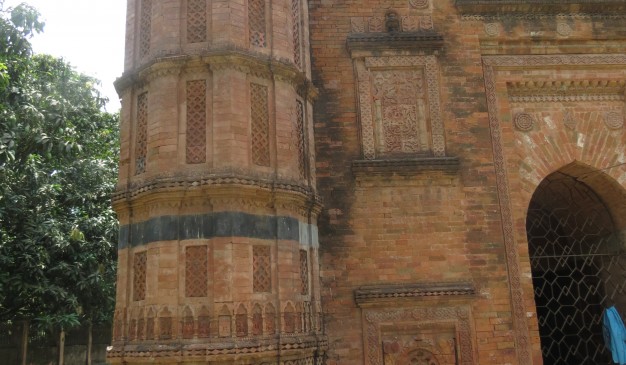
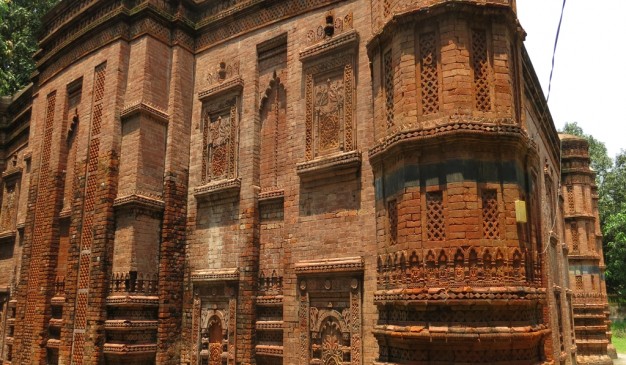
Dasbari Mosque is located close to Ompur in between Sona mosque and Kotowali Dorja. Generations of local people say it as Dasbari. It is an abandoned place now. According to an inscription in 1497 during the reign of Sultan Shamsuddin Yousuf this mosque was built.
No explanations are found regarding how this mosque was named. It is modeled after the Chamchika mosque in India. Like Dasbari this mosque is built with terracotta bricks. Its circumference is so thick that during the month of Chaitra when it is so hot outside but it remains cool inside. The main dome here looks pretty attractive. North to the mosque there is a Dighi whose volume is 60 bigha.
)
[1] => Array
(
[name] => Dhanmondi Old Eidgah
[post_id] => 8738
[post_link] => http://offroadbangladesh.com/places/dhanmondi-old-eidgah/
[thumb_link] => http://offroadbangladesh.com/wp-content/uploads/2015/05/Dhanmondi-Old-Eidgah-11-300x165.jpg
[post_content] => We came to know that Dhaka has passed it's 400 years of Glory. As it was one of the capital of Mughal Empire established in the bank of the river Buriganga, most of its old architectural sites are placed in the old town. Apart from these, there is an Eidgah established in Dhanmondi area 400 years ago which is still in use in the center point of Dhanmondi.
Many people do not aware about it. It is located near Dhanmondi KFC and the shopping mall Anam Rangs Plaza. According to Wikipedia, it was built by Shah Suja, son of Emperor Shah Jahan in 1640. Now the place is in danger because of the negligence of the government to preserve the place as a Historical Monument.
)
[2] => Array
(
[name] => {:en}Chuna Khola Mosque{:}{:bn}চুনাখোলা মসজিদ{:}
[post_id] => 1508
[post_link] => http://offroadbangladesh.com/places/chuna-khola-mosque/
[thumb_link] => http://offroadbangladesh.com/wp-content/uploads/2015/02/Chuna-Khola-Mosque-bagerhat-031-300x225.jpg
[post_content] => {:en}
Chuna Khola Mosque or single domed square mosque is similar to Singair Mosque and Bibi Begni’s Mosque. Chuna Khola Mosque has three pointed arched entrances, rectangular frames border the north and south sides. The mosque has three Mihrabs along the west wall corresponding to the three doorways on the east. The central one is huge. Rectangular frames border the Mihrabs too with terracotta decorations. A horizontal row exists at the top. There is a Kalasa motif in the middle of the row above the central frame. The interiors of the Mihrabs are extensively decorated with terracotta motifs.
Unlike any other mosques from around, this one was having plenty of spaces around. In fact it was at the middle of the field (paddy or other seasonal). It is a single dome mosque and the dome is noticeably larger one. Also, the dome isn't placed at the center of the mosque. From my observation the dome is inclined slightly towards the Northern wall.
Apart from the beautiful semi spherical dome atop, the mosque is having three doors at the Eastern wall. And a single door each at the Northern and Southern walls. The mosque has beautiful four columns at the four corners of the mosque (similar to any other from it's contemporary). The shape of this Chunakhola Mosjid is square.
{:}{:bn}খুলনা বিভাগের বাগেরহাট জেলায় একটি বিশাল কৃষিক্ষেতের পাশে বিবি বেগনি মসজিদের ১ কিলোমিটার উত্তর পশ্চিমে চুনাখোলা মসজিদ অবস্থিত। এক গম্বুজবিশিষ্ট এই মসজিদটির সাথে সিঙ্গাইর মসজিদ এবং বিবি বেগনির মসজিদের মিল রয়েছে। মসজিদে তিনটি ধনুকআকারের ফটক রয়েছে এবং উত্তর ও দক্ষিনদিকে আয়াতক্ষেত্রাকার কাঠামো রয়েছে। মসজিদের পশ্চিম দেয়ালের তিনটি মিহরাব পূর্বদিকের তিনটি ফটক বরাবর অবস্থিত। এখানকার তিনটি মিহরাবের মধ্যে মাঝখানেরটি আকারে বড়। চুনাখোলা মসজিদের মিহরাবগুলোতে টেরাকোটার নকশার পাশাপাশি আয়াতক্ষেত্রাকার কাঠামো রয়েছে এবং মিহরাবগুলোর উপরিভাগে একটি সমান্তরাল সারি রয়েছে এবং মাঝখানের কাঠামোর উপরের মধ্যেখানে কলসের নকশা রয়েছে।{:}
)
[3] => Array
(
[name] => Walipur Alamgiri Mosque
[post_id] => 5153
[post_link] => http://offroadbangladesh.com/places/walipur-alamgiri-mosque/
[thumb_link] => http://offroadbangladesh.com/wp-content/uploads/2015/03/WalipurAlamgiriMosque-300x214.jpg
[post_content] =>
Walipur Alamgiri Mosque is situated in Walipur village under Hajiganj Upazila of Chandpur district. There are two mosques in the same locality - one known as Shahi Alamgiri Mosque and the other as Shah Shuja Mosque. The Alamgiri mosque has suffered much due to subsequent restoration works. Nevertheless, enough still survives to give an idea of its original plan and design. A Persian inscription in fine nastaliq character, fixed over the central doorway, records the construction of the mosque by one Abdullah in 1692 AD in the reign of Alamgir Aurangzeb.
In the middle of the eastern facade of the oblong mosque (15.24 m by 8.23 m) there is a projected fronton bordered with octagonal turrets through which opens out the main doorway. This has a higher arch with a half-dome within a rectangular frame. There are two more doorways in the eastern facade, one on either side of the central opening, having an outer arch with a half-dome below. Each of the north and south walls is pierced with a pair of arched doorways. The mosque has therefore seven archways in total -three in the east and two on each of the north and south walls. The four exterior angles of the building are strengthened by octagonal towers, which are carried beyond the horizontal parapets and topped over with kalasa finials, but have now been renovated.
Two massive octagonal brick pillars divide the interior of the mosque into five square bays - a large one in the middle (5.87m a side) and two smaller ones on its either side which are arranged in the east-west axis. Archways interconnect the bays; the arches are placed directly on two free standing octagonal pillars and engaged semi-octagonal pillars. It is worth noting that these arches are continued upwards as walls to make the bays above. This special device has given the mosque a two-storied appearance internally. All the five bays are roofed over with domes crowned with lotus and kalasa finials on cylindrical drums. The domes are carried on half-domed squinches on the upper corners and the blocked arches in between the square inches in the middle of the walls.
Octagonal turrets rising high above the horizontal parapets border the outside projection of the central mihrab, like that of the central archway. Inside, there are three mihrabs in the qibla wall. The central mihrab is semi-octagonal in design, but the flanking mihrabs are of the shallow rectangular type.
The original plastering of the building has been replaced by modern cement plaster. The horizontal parapet is now plain. The facade of the central archway projection is marked with shallow rectangular panels, each being further enriched with such motifs as plants and small trees with flowers in stucco. The central mihrab arch springs from beautifully decorated pilasters and has foliaged designs at its spandrels. The rectangular frame of the central mihrab, though now barely plain, is topped over with a frieze of blind merlons. A fine specimen of Mughal stucco ornamentation is still preserved in the squinches and blocked arches in between, which support the domes above. The extrados of the squinch arches and blocked arches are ornamented with interlocking scrolls, while the tympanums of the blocked arches are minutely embellished with floral scrolls with intertwining rosettes in the centers. Above them all round the interior base of the cylindrical drum runs a slightly sunken frieze decorated with floral scrolls.
Five-domed type mosque, one of the important varieties of Bengal mosques, shows two sub-types: (a) a mosque with a large central dome and a pair of small domes on each side in the same line and (b) a mosque with a large central dome and four small domes on the corners. The present mosque is the culminating example of the second variety. Both in planning and in the execution of elevation details of the building, the architect and the artisans have left behind a clear mark of their skills and perfection of ideas. The division of the interior of the mosque into five squares has been very scientifically effected by the disposition of two octagonal short massive freestanding pillars instead of the two east-west wide arches of the previous examples of the series. Mosques on this model were not built in Bengal for a long time, but almost two centuries later the type reappeared in the Becharam Dewri Mosque (1872) in the city of Dhaka. In plan Becharam Dewri Mosque is an exact copy of the Alamgiri Mosque but inferior in quality and elevation details.
Such mosque design in Bengal started with austagram mosque and evolved through the sarail mosque and the Walipur Alamgiri Mosque. The design is really unique. Question may now arise as to the origin of this particular kind of Bengal mosques. In Turkey under the early Ottomans the mosque of Rustam Celebi (c first half of the 15th century) at Tokat provides perhaps the earliest known example of its kind with five domes - the large central one and a small one on four corners. Similar plan is also found in such other Ottoman mosques as the Guzelce Hasan Bey Mosque (1406) in Hayrabolu and the Uc Serefeli Cam (1437-47) at Edirne. These mosques are generally regarded as the precursors of the great Ottoman mosques at Istambul - Bayezid mosque (1501-06), Sulaymaniya Mosque (1550-59), and the beautiful Selimya Mosque (1569-75) at Edirne. The five-roomed or five-domed planning of the Ottoman mosques may perhaps be said to have been dictated by those of some early Muslim buildings of Syria.
In India the Jamat Khana Mosque (1310-16) at Delhi is a lone example of its kind. This mosque design continued to have been practiced in Northern India in an elaborated form in Humayun's Mosque (1530) at Agra, where four small domed-rooms, instead of two, are attached on either side of the large central domed chamber. It may, therefore, be said that the plan of the second variety of the five-domed type mosques in Bengal was not innovated by Bengal architects, and its idea is very likely to have been borrowed from the sources stated above, particularly perhaps from those of Turkey or Upper India.
Written by: MA Bari
)
)