Array
(
[0] => Array
(
[name] => {:en}Hanging Bridge{:}{:bn}ঝুলন্ত সেতু{:}
[post_id] => 1229
[post_link] => http://offroadbangladesh.com/places/hanging-bridge/
[thumb_link] => http://offroadbangladesh.com/wp-content/uploads/2015/02/Hanging-Bridge-of-Rangamati-9-300x169.jpg
[post_content] => {:en}
Rangamati is a popular place in Bangladesh. It is located seventy seven kilometers away from Chittagong City.
There are some naturally exotic places located in this district which attracts traveler from different directions of country and abroad every year. Among these tourist places Hanging Bridge is more famous and attractive for its uniqueness. Architectural beauty and exotic natural view from this bridge is something very amazing for traveler.
Whenever a traveler wish to pay a visit in this spot he/she may enjoy several adjacent features along with that. Kaptai Lake is dispersed all around the place and several attractions like Shuvolong Waterfall, DC Bungalow and Peda ting ting is reachable through the channel of this Lake.
{:}{:bn}চট্রগ্রাম থেকে ৭৭ কিলোমিটার দূরে অবস্থিত রাঙ্গামাটি হলো দেশের অন্যতম জনপ্রিয় স্থান। কাপ্তাই লেকের উপর অবস্থিত ঝুলন্ত সেতু র জন্য রাঙ্গামাটির রয়েছে বিশেষ খ্যাতি। বাংলাদেশের অন্যতম আকর্ষণ এই ঝুলন্ত সেতুটি দেখতে প্রতিবছর প্রচুর পর্যটক রাঙ্গামাটিতে আসেন।{:}
)
[1] => Array
(
[name] => Muktarpur Bridge
[post_id] => 11760
[post_link] => http://offroadbangladesh.com/places/muktarpur-bridge/
[thumb_link] => http://offroadbangladesh.com/wp-content/uploads/2015/07/muktarpur-bridge-300x169.jpg
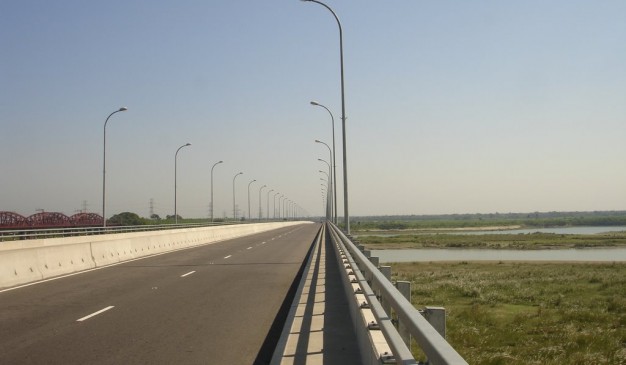
[post_content] => The sixth Bangladesh-China friendship bridge over the river Dhaleswari (ধলেশ্বরী) that connects Narayanganj and Munshiganj district is another attractive place to visit at Munshiganj. This bridge is at muktarpur, all buses from Dhaka to Munshiganj used to give a stoppage at the base of the bridge.
Muktarpur bridge was opened for public at 18th February 2008, and it was opened by the Chief Advisor of Bangladesh Government, Mr. Fakhruddin Ahmed. Before the bridge was established , people of that particular area used to cross the river with trawler boats, and the vehicles through Ferry. After its construction, now a days, it’s no more require the Ferry transport, but still some people used to cross the river using boat. The bridge is not allowed to take any Rickshaw, that's why I think people are still using this route.
It takes around 15 minutes to cross the bridge. Even though you are there at summer season, but at the middle of the bridge, there’s always plenty of cool airs from the river, and that was enough to ease the hot from the sun. It’s a lovely place to enjoy your time. At Every moment, under the bridge, different types of water vehicles are passing. Some are bigger in size, some are smaller. Some boats are carrying goods, like sand, woods, etc. Some are trawler that carrying people to their destination. Also from the middle of the bridge, you can enjoy the beauty of the river Dhaleswari. At the both side of the bridge there are lovely scene to watch. The water of the river is clean. Not dirty like other rivers from Dhaka or Narayanganj area. You'll find lots of people are having baths at the bank of the river. There is a stair at the bridge where the river bank started. If you want, you can get down from the bridge using the stairs, and enjoy the beauty of the bridge under the bridge.
)
[2] => Array
(
[name] => Teesta Railway Bridge
[post_id] => 6434
[post_link] => http://offroadbangladesh.com/places/teesta-railway-bridge/
[thumb_link] => http://offroadbangladesh.com/wp-content/uploads/2015/04/tista-barrage1-300x200.jpg
[post_content] =>
Teesta Railway Bridge is the third largest railway bridge of the country lengths about 2000 feet and constructed in the year 1834.
In 1978, to manage load of road vehicles for Lalmonirhat, Kurigram and beyond by ferry, the then president Ziaur Rahman instructed the Railway and Roads authority to set wooden sleepers in the rail bridge between the rails for all types of vehicular movement. Same year, March 4, President Ziaur Rahman inaugurated the bridge for vehicular movement. The bridge restores the communication from divisional headquarters of Rangpur with two districts, Lalmonirhat and Kurigram.
The bridge is now in broken-down condition and needs major repair. For motor vehicles construction of a road bridge began next to it in 2006 for completion by 2009 at a cost of Tk 1.22 billion which is now expected to be opened in June 2012.
)
[3] => Array
(
[name] => {:en}Rezu Khal and The Bridge{:}{:bn}রেজু খাল এবং সেতু{:}
[post_id] => 7118
[post_link] => http://offroadbangladesh.com/places/rezu-khal-and-the-bridge/
[thumb_link] => http://offroadbangladesh.com/wp-content/uploads/2015/04/Rezu-khal-and-the-bridge2-300x240.jpg
[post_content] => {:en}
Reju khal or Rezu khal and the bridge are situated far from the Cox's Bazar town. It’s near to the Enani beach. When you are traveling to the Enani beach, on the way, you'll find the bridge, and the canal. After few meters from the bridge, it just meets the vast Bay of Bengal Ocean.
The bridge over the canal was opened for people during 1995. It helped the transport facility from Cox's Bazar to Enani beach a lot. At the canal, there are several varieties of small fish, crabs, snails, mussels are available. It’s strictly prohibited to collect or catch those.
[We need more detail information of this spot. If you have more information and photos, please be advised to add and share in our website. Your name will be published as a Content Contributor]
{:}{:bn}
রেজু খালের অবস্থান কক্সবাজার শহর থেকে বেশ দূরে ইনানী সৈকতের নিকটে। ইনানী সৈকত দেখতে যাওয়ার পথে সেতু এবং খালটি আপনার চোখে পড়বে। সেতু থেকে মাত্র কয়েক মিটার দুরেই এই খালটি বিশাল বঙ্গোপসাগরে মিলিত হয়েছে।
খালের উপরে অবস্থিত সেতুটি ১৯৯৫ সালে সর্বসাধারনের চলাচলের জন্য উন্মুক্ত করা হয়। সেতুটি নির্মাণের ফলে কক্সবাজার থেকে ইনানী সৈকতে পরিবহন ব্যাবস্থা অনেকাংশে সহজতর হয়েছে। রেজু খালে বিভিন্ন প্রজাতির ছোট মাছ, কাঁকড়া, শামুক, ও ঝিনুক রয়েছে। তবে, এসব জলজ প্রাণী খাল থেকে সংগ্রহ করা নিষিদ্ধ।
{:}
)
)