Array
(
[0] => Array
(
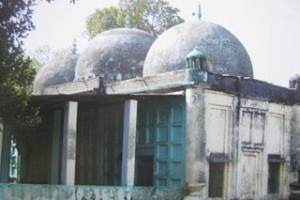
[name] => Kellaband Mosque
[post_id] => 1907
[post_link] => http://offroadbangladesh.com/places/kellaband-mosque/
[thumb_link] => http://offroadbangladesh.com/wp-content/uploads/2015/02/Kellaband-Mosque-300x200-300x200.jpg
[post_content] => This three-dome mosque is about 200 year’s elderly. A concrete well & an ancient cemetery are lying beside the mosque.
)
[1] => Array
(
[name] => Vanga Shahi Masjid
[post_id] => 10254
[post_link] => http://offroadbangladesh.com/places/vanga-shahi-masjid/
[thumb_link] => http://offroadbangladesh.com/wp-content/uploads/2015/06/114-300x169.jpg
[post_content] =>
Vanga Shahi Masjid (ভাঙ্গা শাহী মসজিদ) is an ancient mosque in Bandura, Nawabganj. Its original year of establishment is not yet known. It is believed that it was built during the period of Mughal Emperor Jahangir, that's why it is assumed that it was built around 600 years ago.
The mosque has a legend about it. It is believed that one morning some people found it in the jungle with unfinished construction work. From that time the mosque has named "Vanga Masjid" as in the native language vanga (ভাঙ্গা) means broken. The Actual name of this mosque is still unknown.
But the truth may be like this- it was constructed at the age of Mughal Empire when Nawabganj area was a prominent merchant place. Due to erosion, local inhabitants changed their living place. At that time the mosque area was abandoned and forests grew rapidly at that area. After passing 100 years, people start making their residences in that particular area again. One day they found the mosque broken and reconstruct it.
Now it has became a well known mosque at Bandura Bazar in Nawabganj. People believe that donating here will turn their wishes true! So, the mosque has collected enough fund to built a minaret of 165 feet and still the renovation process is still going.
)
[2] => Array
(
[name] => Kherua Masjid
[post_id] => 4643
[post_link] => http://offroadbangladesh.com/places/kheruwa-masjid/
[thumb_link] => http://offroadbangladesh.com/wp-content/uploads/2015/03/Kherua-Mosque1-Sabbir-Sohan1-300x162.jpg
[post_content] =>
It was built at a time when Sultani era was at its end and Mughal era had just set in. According to the inscription found in the mosque, it was built by Nawab Mirza Murad Khan, son of Jawahar Ali Khan Kakshal, in 1582 AD (989 Hijri).
The end of the 16th century AD is regarded as a tumultuous period in the history of Bengal due to anti-Mughal resistance spearheaded by the Bara Bhuiyans. During this era, the region, mentioned as ‘Sherpur Morcha’ in Ain-i Akbari by abul fazal, was the stronghold of the Kakshal rebels. They expressed solidarity with the bara bhuiyans of Bengal and the Afghan leader Masum Khan Kabuli. In fact Khherua mosque came into being to serve the community. As it was built while a political crisis was going on, a degree of negligence is evident in the construction and ornamentation of the mosque.
The rectangular mosque is 17.34 meters long from north to south while 7.5 meters wide from west to east. Its dimension from inside is 13.72 meters long and 3.8 meters wide. The walls are about 1.83 meters thick. The mosque has three entrances on the east, of which the central one is bigger than the two on its sides. Also, there is an entry on each side on the north and the south. Inside the mosque, on the west wall, there are three half-cylindrical concave mihrabs within a rectangular frame. The one in the middle is bigger than the other two and all three are devoid of any ornamentation.
Kherua mosque has three domes in a row, which look like three bowls of same size placed upside down. There is no motif or ornamentation on the domes. The construction looks similar to that of Sultani era. The two sides of the cornice are slightly curved taking after the traditional hut of Bengal. This type of roof treatment is seen in most of the 15th century architectural works. In the front walls some paneling work was done. There was some ornamentation with terracotta tiles, which are no longer there now. There were two inscriptions engraved on the two sides of the central entrance. One inscription is still there while the other is being preserved in the Karachi Museum. From the shape of the stone used for the inscription, it is assumed that the piece was the part of a statue; and the inscription was inscribed on the backside of the statue and placed on the wall. Kherua Mosque demands a great importance as an example of early mughal mosques in Bengal.
)
[3] => Array
(
[name] => {:en}Atiya Jame Masjid{:}{:bn}আতিয়া জামে মসজিদ{:}
[post_id] => 4502
[post_link] => http://offroadbangladesh.com/places/atia-jame-masjid/
[thumb_link] => http://offroadbangladesh.com/wp-content/uploads/2015/03/Tangail_mosque-Atiya-by-maremagna1-300x225.jpg
[post_content] => {:en}
The photo of this iconic mosque used to be printed on the Ten Taka note of Bangladesh. Nowadays these notes are very rare and are available only at the banks or on in the collection of few people now a days. Atiya is a historical four century year old mosque located at the Delduar Thana of Tangail district. It was named by the village Atiya and the mosque is also known as Atiya Jame Masjid.
Atiya Jame Mashjid is approximately 6 kilometers from the Tangail town. A small river called Louhojong Nodi flows near the mosque which gives it a more aesthetic appeal. The mosque is around 18m by 12m, it has four spherical domes at the top, one is the larger, which is located at the west part of the mosque. Other three are smaller sized and located at the east side of the mosque. All three domes are in a single row. Seems like the bigger one is for the Imam, and other three are for Musalli (regular people). All the domes are decorated at the bottom part and having a small minaret like object at the top. The mosque has four pillars at the four corners and each of the pillars are stylish and decorated nicely.
The mosque has lovely terracotta at the outer side of east and the north side wall. Those are very simple with just few small flowers inside the circles. The mosque has three entrance at the east side, and two entrance at the north and south side each.
This mosque was built during 1610 by Muslim Jomidar Sayeed Khan Panni, son of Baizid Khan Panni. He also dug a large water tank at the western side of the mosque. Local says that the mosque was built for the honor of a saint Shah Baba Kashmiri.
The mosque was damaged during the massive earthquake of 1800. A reconstruction of the mosque was made in 1837. Also, during 1909 another reconstruction made by two Jamindar from Korotia and Delduar of Tangail jointly. Wazed Ali Khan Panni was from Korotia, and Abu Ahmed Guznavi Khan from Delduar.
{:}{:bn}
পুরাতন দশ টাকার নোটের ডানদিকে এই মসজিদটির ছবি রয়েছে। তবে আজকাল দশ টাকার পুরাতন নোটটি ব্যাঙ্কে পাওয়া যায় এবং মাঝে মাঝে মানুষের হাতে দেখা যায়। প্রায় চারশত বছর পুরাতন ঐতিহাসিক আতিয়া মসজিদ টাঙ্গাইল জেলার দেলদুয়ার থানায় অবস্থিত। আতিয়া গ্রামের সাথে মিল রেখে মসজিদের নামকরণ করা হয়েছে।
টাঙ্গাইল শহর থেকে প্রায় ৬ কিলোমিটার দূরে লৌহজং নামে একটি ছোট নদী মসজিদের কাছ দিয়ে বয়ে গিয়েছে। মসজিদটির দৈর্ঘ্য ১৮ মিটার এবং প্রস্থ ১২ মিটার। আতিয়া মসজিদে চারটি গো্লাকারের গম্বুজ রয়েছে যেগুলোর মধ্যে বড় গম্বুজটি মসজিদের পশ্চিম অংশে অবস্থিত। বাকি তিনটি গম্বুজ আকারে ছোট এবং মসজিদের পূর্বদিকে একই সারিতে অবস্থিত। গম্বুজগুলো দেখে মনে হয় যেনো বড় গম্বুজটি হল ইমাম এবং বাকি গম্বুজগুলো হল মুসল্লি। গম্বুজগুলোর নীচের অংশে নকশার কাজ রয়েছে এবং উপরে ছোট মিনারের মত বস্তু রয়েছে। মসজিদের চারকোণায় চারটি চমৎকার নকশা করা পিলার রয়েছে।
আতিয়া মসজিদের পূর্ব এবং উত্তর দিকের বাইরের দেয়ালে টেরাকোটার উপর চমৎকার বৃত্তের মাঝে ছোট ফুলের নকশার কাজ রয়েছে। মসজিদের পূর্বদিকে তিনটি, উত্তর ও দক্ষিন দিকে দুটি করে প্রবেশপথ রয়েছে।
১৬১০ সালে বাইজিদ খান পন্নীর পুত্র মুসলিম জমিদার সাইদ খান পন্নী এই মসজিদটি নির্মাণ করেছিলেন। তিনি মসজিদের পশ্চিমদিকে একটি বড় পানির ট্যাংক খনন করেছিলেন। স্থানীয়রা বলে থাকেন সাধক শাহ বাবা কাশ্মীরির সম্মানে এই আতিয়া মসজিদটি নির্মাণ করা হয়।
১৮০০ সালের প্রচণ্ড ভুমিকম্পে আতিয়া মসজিদ ক্ষতিগ্রস্ত হয় এবং ১৮৩৭ সালে মসজিদটি পুনঃ নির্মাণ করা হয়। এছাড়া ১৯০৯ সালে টাঙ্গাইলের করটিয়ার জমিদার ওয়াজেদ আলী খান পন্নী ও দেলদুয়ারের জমিদার আবু আহমেদ গজনবী খান যৌথভাবে মসজিদটি পুনঃ নির্মাণ করেন।
{:}
)
)