Brief
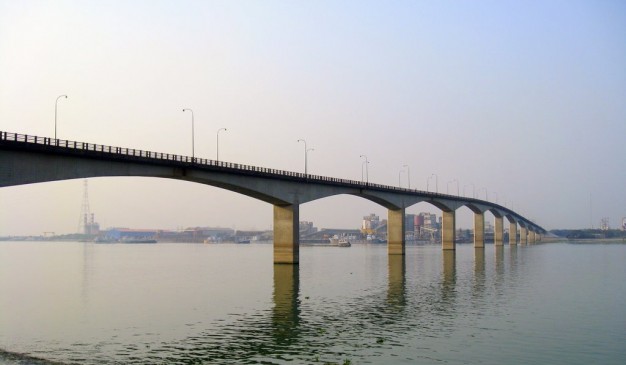
Official name of Meghna Bridge is Japan Bangladesh Friendship Bridge 1. It carries Motor vehicles and pedestrians. It is situated over the Meghna River. This bridge was designed by Cantilever bridge. The total length of the bridge is 900 meters (2,952 ft 9 inches), in width 9.2 meters (30 ft 2 inches). The longest span is 87 meters (285 ft 5 inches). It was opened for public in February 1, 1991. The coordinates is 23°36.162′N 90°36.991′E
Meghna Bridge is a road bridge in Bangladesh. It was built by assistance of Japan and officially named Japan Bangladesh Friendship Bridge 1, but it is popularly known as Meghna Bridge. According to a study conducted in 2004 by the Embassy of Japan in Bangladesh, residents living around the Meghna Bridge recognized several positive impacts after the construction of the bridge. In 2005, the bridge underwent extensive repair because the expansion joints of the bridge were damaged due to the lack of appropriate maintenance.
Architecture: Meghna Bridge is a cantilever and girder bridge. It is 930 meters (3,051 ft 2 in) in length with dual carriageway and 9.2 meters (30 ft 2 in) in width. The bridge has thirteen spans. Two among the individual spans are of 24.25 meters (79 ft 7 in) in length each, one is of 48.3 meters (158 ft 6 in) in length, nine spans are of 87 meters (285 ft 5 in) in length each and the length of the rest is 18.2 meters (59 ft 9 in). The carriage way of the bridge is 7.2 meters (23 ft 7 in). The foundations are supported on RCC caissons and piles. Piled foundation of abutments are buried. RCC caissons which are used as foundation under the piers are also buried. Both abutments and the piers of the bridge are RCC solid type. The piers of the bridge are hexagonal. Each pier is of 11 meters (36 ft 1 in) in length and 3.2 meters (10 ft 6 in) in width.
The wing walls of the bridge are of RCC and are fixed with abutments and have no weep holes. Railing type of the bridge is of R.C.C post and steel rail. The bridge has 0.80 meters (2 ft 7 in) wide sidewalk at both sides. Meghna Bridge also has infrastructure of drainage.
Economic impact: Traffic volumes across the Meghna River and of National Highway No. 1 significantly increased after the opening of the Meghna Bridge. In April 1997, an average of 10,149 vehicles of all types used the bridge in each 24 hours while March 2004 saw 9,704 vehicles per day. The reason behind this fall in traffic volume is attributed to increase in toll rate in 2002 and seasonal fluctuations. Below is a comparison of vehicles using the bridge per day in April 1997 and March 2004.
The survey conducted in 2004 by the Embassy of Japan in Bangladesh found that a majority of the users of the bridge believe that the construction of the Meghna Bridge improved the life of the people living near it and the surrounding area of the bridge has been urbanized. The people surveyed opined that the number of traffic blockage caused by bad weather has been decreased since the construction. The survey also found that 42% of the trucks using Meghna Bridge transport goods between Dhaka and Chittagong.
Array
(
[0] => Array
(
[name] => {:en}Rupsha River and Bridge{:}{:bn}রূপসা নদী এবং সেতু{:}
[post_id] => 5440
[post_link] => http://offroadbangladesh.com/places/rupsha-river-and-bridge/
[thumb_link] => http://offroadbangladesh.com/wp-content/uploads/2015/03/Rupsha-River1-300x225.jpg
[post_content] => {:en}
Rupsha River and Bridge are located in south-west of Bangladesh. It is formed as a result of union of the Bhairab and Atrai rivers. It changes its name to Pasur River near Chalna while flowing into the Bay of Bengal.
Rupsha is a very popular river in Bangladesh. Flowing by the sides of Khulna city, it connects to the Bay of Bengal by Poshur River at Mongla channel. This river has very good natural sight in both of its banks.
In the bank of this important river, many fisheries, dock yard, ship yard, factories are located. Many fishermen run their families through fishing. The bridge over this river, known as Khan Jahan Ali Rupsha Bridge, connects Khulna and Bagerhat Districts.
{:}{:bn}দক্ষিন-পশ্চিম বাংলাদেশে অবস্থিত রূপসা নদীটির জন্ম হয়েছে ভৈরব এবং আত্রাই নদীর মিলনের ফলে। চালনার কাছে এসে বঙ্গোপসাগরে মিলে যাওয়ার পূর্বে এই নদীটির নাম হয়ে গিয়েছে পশুর। বাংলাদেশের অত্যন্ত জনপ্রিয় রূপসা নদীটি খুলনা শহরের পাশ দিয়ে বয়ে গিয়েছে এবং পশুর নদীর মাধ্যমে মংলা চ্যানেলে বঙ্গোপসাগরে যুক্ত হয়েছে। রূপসা নদীর দুই তীরেই রয়েছে অপরূপ প্রাকৃতিক সৌন্দর্য।
বাংলাদেশের অত্যন্ত গুরুত্বপূর্ণ এই নদীটির তীরে অনেক ফিশারিজ, ডকইয়ার্ড, শিপইয়ার্ড, এবং কারখানা অবস্থিত। এই নদীতে মাছ ধরে অনেক জেলে পরিবার তাঁদের জীবিকা নির্বাহ করে। রূপসা নদীর উপর স্থাপিত সেতুটির নাম খান জাহান আলী রূপসা সেতু। এই সেতুটি খুলনা এবং বাগেরহাট জেলাকে সংযুক্ত করার পাশাপাশি দেশের অর্থনীতিতে গুরুত্বপূর্ণ ভুমিকা পালন করছে।{:}
)
[1] => Array
(
[name] => Hardinge Bridge
[post_id] => 2871
[post_link] => http://offroadbangladesh.com/places/hardinge-bridge/
[thumb_link] => http://offroadbangladesh.com/wp-content/uploads/2015/02/Hardinge-Bridge-300x146.jpg
[post_content] =>
Hardinge Bridge (Bengali:
হার্ডিঞ্জ ব্রিজ) is a steel railway bridge over the river Padma located at Paksey in western Bangladesh. It is named after Lord Hardinge, who was the Viceroy of India from 1910 to 1916. The bridge is 1.8 kilometers (1.1 mi) long. It is named after Lord Hardinge. From 1910-1916 he was the Viceroy of India. Its construction began in 1910 and ended in 1912, though it was proposed two decades ago. There was train movement on it from 1915. There was proposal of constructing a railway bridge over Padma. Eastern Bengal Railway laid the proposal in 1889.The motive of constructing this bridge was to ease communication between Eastern part of Bengal and Kolkata.
The construction of a railway bridge over the Padma was proposed in 1889 by the Eastern Bengal Railway for easier communication between Calcutta and the then Eastern Bengal and Assam. In 1902, Sir FJE Spring prepared a report on the bridge. A technical committee reported that a bridge could be constructed at Sara crossing the lowerGanges between the Paksey and Bheramara Upazila stations on the broad gauge railway from Khulna to Parbatipur Upazila. The construction of the bridge started in 1910 and finished two years later. The bridge comprises 15 steel trusses. The main girders are modified "Petit" type.
The most difficult task of the operation was to prevent bank erosion and to make the river flow permanently under the bridge. For this, two guide banks of the "Bell-bund" type named after J. R. Bell were built on either side, each extending 910 metres (3,000 ft) upstream and 300 metres (1,000 ft) downstream from the bridge.
[2] The ends of the river banks were curved inward and heavily pitched with stone.
Hardinge Bridge was severely damaged during the Liberation War of Bangladesh of 1971. It happened on 13 December 1971, when the Indian Air Force plane bombed on the 4th guarder from the Paksey side. As the Pakistani army was on retreat towards Jessore (their last stronghold) Hardinge Bridge was strategically very important. The allied force damaged the bridge. The Japanese Government helped to reconstruct the bridge. It is the second largest railway bridge in Bangladesh. Another bridge named Lalon Shah Bridge for road transport beside the Hardinge Bridge has recently been constructed.
)
[2] => Array
(
[name] => Hatirpool Bridge
[post_id] => 1054
[post_link] => http://offroadbangladesh.com/places/hatirpool-bridge/
[thumb_link] => http://offroadbangladesh.com/wp-content/uploads/2015/02/Hatir-Pool-Bridge41-300x225.jpg
[post_content] =>
Hatirpool Bridge is located near Beriura Bazar at Sarail Upazila, Brahmanbaria on the way to Dhaka-Chittagong road. A road was built by Dewan Shabaz Ali from Sorail to Shabazpur during 1650 A.D. Many assume that this bridge was built at that time. Locally it is known as ‘Hatir Pool’. It is said that Dewans used to cross the river on back of elephant over this bridge.
This brick built bridge is curved in from with one big arched opening. Hatir Pool is a protected monument of Department of Archaeology, Bangladesh.
[This spot needs more detail. If you have more information and photos, please be advised to add in our website. Your name will be published as a Content Contributor]
)
[3] => Array
(
[name] => Bangabandhu Bridge
[post_id] => 5289
[post_link] => http://offroadbangladesh.com/places/bangabandhu-bridge/
[thumb_link] => http://offroadbangladesh.com/wp-content/uploads/2015/03/Bangabandhu_Jamuna_Bridge2-Nusrat-Kabir1-300x210.jpg
[post_content] =>
Bangabandhu Bridge, commonly called the Jamuna Multi-Purpose Bridge (Bengali: যমুনা বহুমুখী সেতু) is a bridge opened in Bangladesh in June 1998. It connects Bhuapur on the Jamuna River's east bank to Sirajganj on its west bank. It was the 11th longest bridge in the world when constructed in 1998 and currently the 6th longest bridge in South Asia. It was constructed over the Jamuna River, one of the three major rivers of Bangladesh, and fifth largest in the world in discharge volume.
The bridge established a strategic link between the eastern and western parts of Bangladesh. It generates multifarious benefits for the people and, especially, promotes inter-regional trade in the country. Apart from quick movement of goods and passenger traffic by road and rail, it facilitated transmission of electricity and natural gas, and integration of telecommunication links. The bridge is on the Asian Highway and the Trans-Asian Railway which, when fully developed, will provide uninterrupted international road and railway links from Southeast Asia through Central Asia to northwest Europe.
The Bridge over the river Jamuna is the largest bridge from the Bangladesh. It’s now the 5th longest bridge from South Asia. This bridge connects the North Bengal, connection place is Sirajganj and Bhuapur of Tangail. This bridge was open for the public during June 1998. Initially the bridge was open for all the visitors, tourists, and all pedestrians. But now this bridge is only accessible using certain kind of vehicles.
)
)